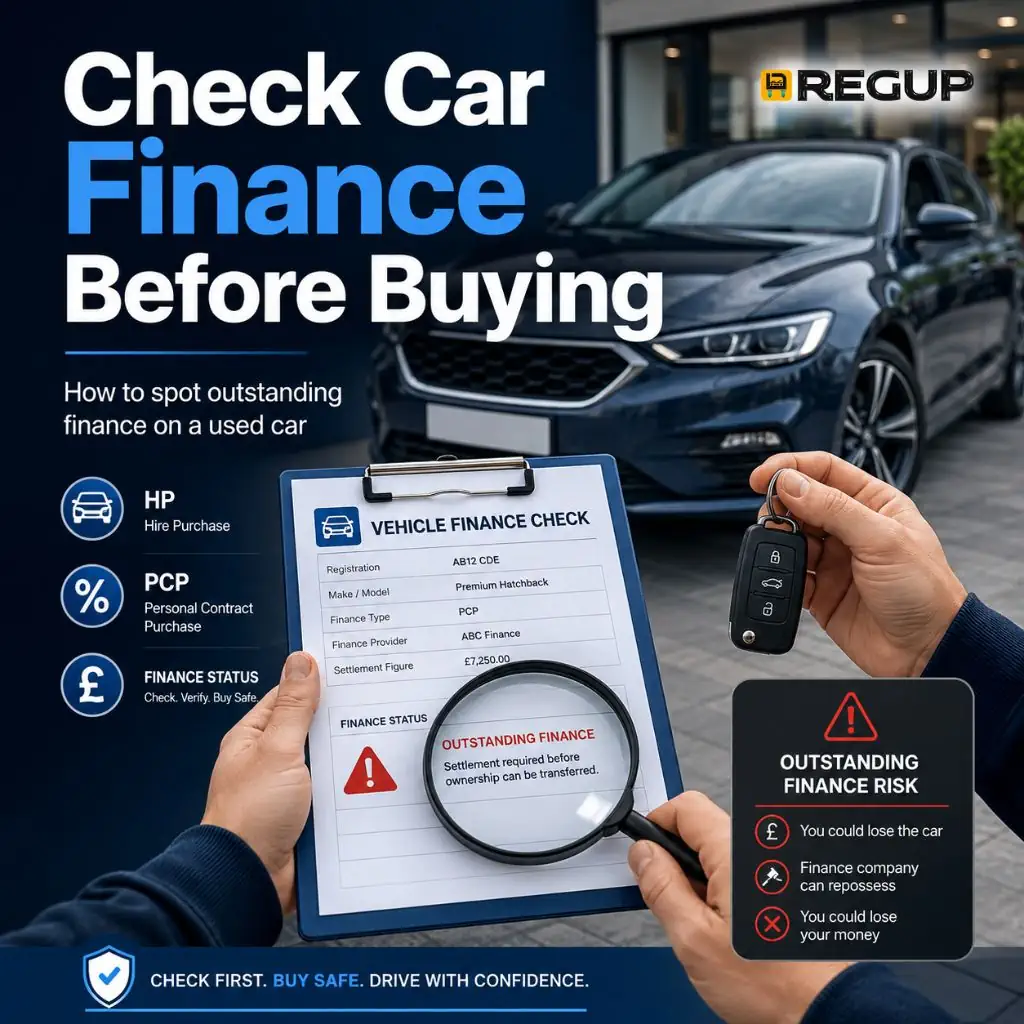
Key points
- Around one in three used cars in the UK still has money owing on it
- The finance company owns the car under HP and PCP until the final payment clears, not the seller
- The V5C logbook never proves ownership, so a genuine-looking logbook does not rule out outstanding finance
- Run a finance check before you pay a deposit, and run it again on the day you complete the purchase
- If finance is found, get a settlement figure and pay it directly to the lender, not the seller
- The Hire Purchase Act 1964 offers narrow protection to good-faith private buyers only, not a guarantee
How to check outstanding finance on a car before you buy
Enter the registration into a finance check before you hand over any money. It takes seconds, and it is the only way to find out whether the person selling the car actually owns it.
Around one in three used cars still has money owing on it. If that agreement was never settled, the finance company is the legal owner, and they can take the car back from you after you have paid the seller in full.
Why a financed car can be taken from you
Under hire purchase and PCP agreements, the finance company owns the vehicle until the final payment clears. The person driving it is the registered keeper, not the owner.
The V5C will not tell you this. It names the keeper. It has never been proof of ownership, and this is exactly the gap that catches people out.
So a seller can hand you a genuine logbook, in their own name, at their own address, and still have no legal right to sell you the car.
What happens next
The finance company traces the vehicle and recovers it. You are left pursuing a private seller who has your money and may not answer the phone. Civil recovery is slow, expensive and frequently pointless.
The one protection that sometimes applies
The Hire Purchase Act 1964 can protect a private buyer who bought in good faith without knowing about the finance. It is a genuine defence, but it is narrow, it does not cover trade buyers, and relying on it means a legal dispute you did not want. A check costs a fraction of what that would.
The types of agreement to look for
Hire purchase
The lender owns the car until the last payment. Most common on used vehicles and the highest risk to a buyer.
PCP
Same ownership position, with a large optional final payment. Cars are often sold on before that payment is made.
Logbook loans
A loan secured against the vehicle under a bill of sale. Less common now, but particularly nasty because the lender can repossess without a court order in some circumstances.
Personal loans
Not secured against the car, so the seller does own it. These do not show on a finance check and do not affect you.
How to check for outstanding finance
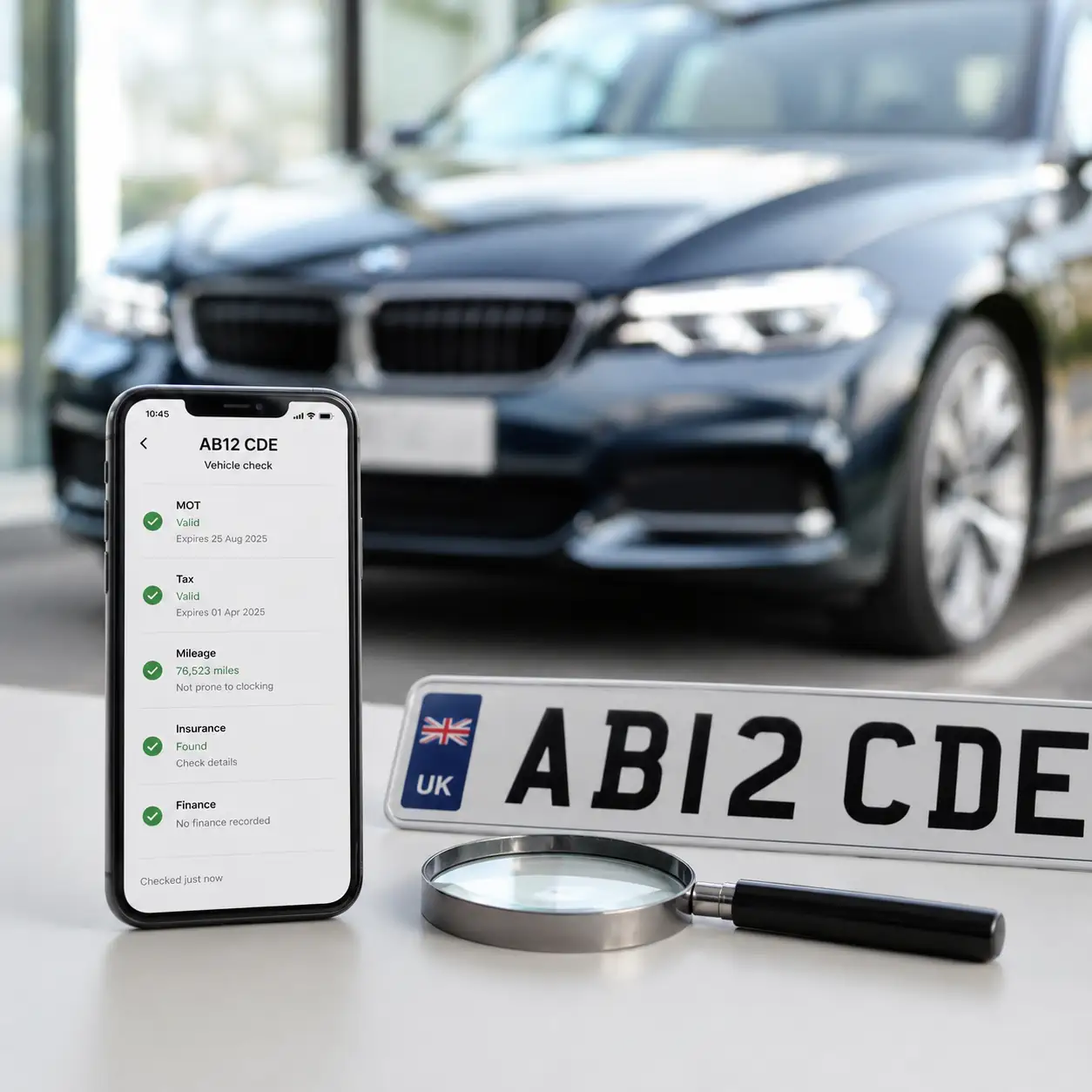
1. Get the registration
Take it from the advert. You do not need the seller's permission and you do not need to tell them. Start with a free car check to confirm the vehicle matches the listing.
2. Run a finance check
An outstanding finance check queries finance industry records and returns whether an agreement is registered against the vehicle, and usually the lender and the date it started.
3. Match the vehicle to the record
Confirm the VIN on the car matches the V5C and the record with a VIN check. Finance is registered against a specific vehicle, so if the identity does not match, the check is meaningless.
4. Check the timing
Compare the agreement date against the keeper history. A previous keeper check and the V5C logbook check tell you whether the finance was taken out by the current seller or someone before them.
5. Recheck on the day
Finance can be taken out at any time. If more than a week or two passes between your check and the purchase, run it again before you pay.
What to do if the check finds finance
It does not automatically kill the deal. It changes how the deal has to be done.

Ask the seller for a settlement figure
Any genuine seller can request one from their lender. It is a standard, quick request. A seller who refuses or stalls is telling you something.
Pay the finance company directly
The safest structure is to pay the settlement figure straight to the lender and the balance to the seller. Never hand the full amount over and trust them to settle it afterwards.
Get written confirmation
Wait for the lender to confirm the agreement is closed before you take the car.
Recheck before you drive away
One final check confirms the marker has cleared.
Walk away if anything is vague
A seller who cannot produce a settlement figure, or who wants cash quickly and a deposit today, is not someone to take a risk with.
Warning signs before you even check
The seller is not the person named on the V5C.
They want to meet somewhere other than the address on the logbook.
The price is noticeably below market value for the mileage and condition.
They push for a fast cash sale or a deposit before you have seen the paperwork.
They cannot explain a recent keeper change.
None of these prove anything on their own. Together with a finance check, a write-off check and a stolen car check, they tell you whether to continue.
Final Thoughts
Outstanding finance is the only used car problem that can cost you the whole purchase price, and it is invisible in the advert, invisible on the car, and invisible on the logbook.
Run an outstanding finance check before you pay a deposit, and run it again on the day you buy. If you want the surrounding picture too, take a full vehicle history report and a car valuation so you know both what you are buying and what it is worth.
Frequently asked questions
Can I check car finance for free?
No, and be careful of anyone claiming otherwise. Finance data is licensed from the finance industry rather than published publicly, so it sits inside a paid report everywhere.
Does the V5C show outstanding finance?
No. The V5C names the registered keeper, not the legal owner. A financed car has a keeper who does not own it, and the logbook looks completely normal.
Can I buy a car with outstanding finance on it?
Yes, if the finance is settled as part of the sale. Pay the settlement figure directly to the lender, get written confirmation the agreement is closed, then recheck before you take the car.
What if I already bought a car with finance on it?
Contact the finance company immediately and explain you bought in good faith. The Hire Purchase Act 1964 may protect you as a private buyer. Get legal advice, and keep every document and message from the seller.
Does a finance check show how much is owed?
Usually not the balance. It shows that an agreement exists, typically with the lender and start date. The settlement figure has to come from the seller's lender.
Do dealers check for finance?
Reputable ones do, and they carry liability if they get it wrong. That is part of why a dealer car costs more than a private one.