Key points
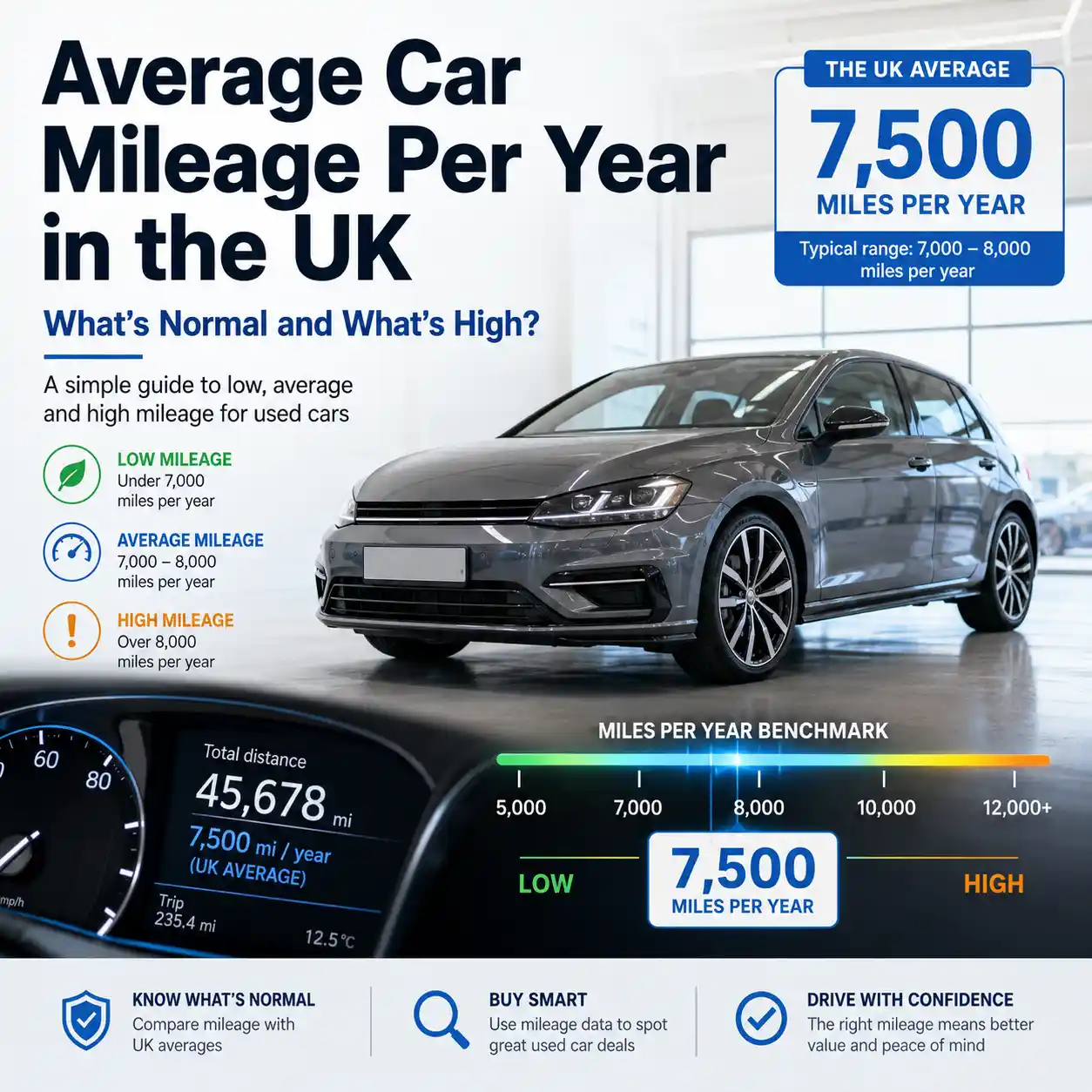
- UK average is roughly 7,000–8,000 miles per year
- Benchmark: age × 7,500 miles
- Diesels typically cover the most miles; city petrol cars the least
- Very low mileage for the car's age can signal clocking, not a bargain
- Motorway miles wear a car less than the same distance in town
- Mileage affects used car value alongside service history and condition
Average Car Mileage Per Year in the UK: What's Normal and What's High
The average car in the UK covers roughly 7,000 to 8,000 miles a year, though this varies by fuel type, use and year. A quick way to judge a used car is to multiply its age by about 7,500. A reading far above or below that figure is worth questioning before you buy.
What is the average car mileage per year in the UK?
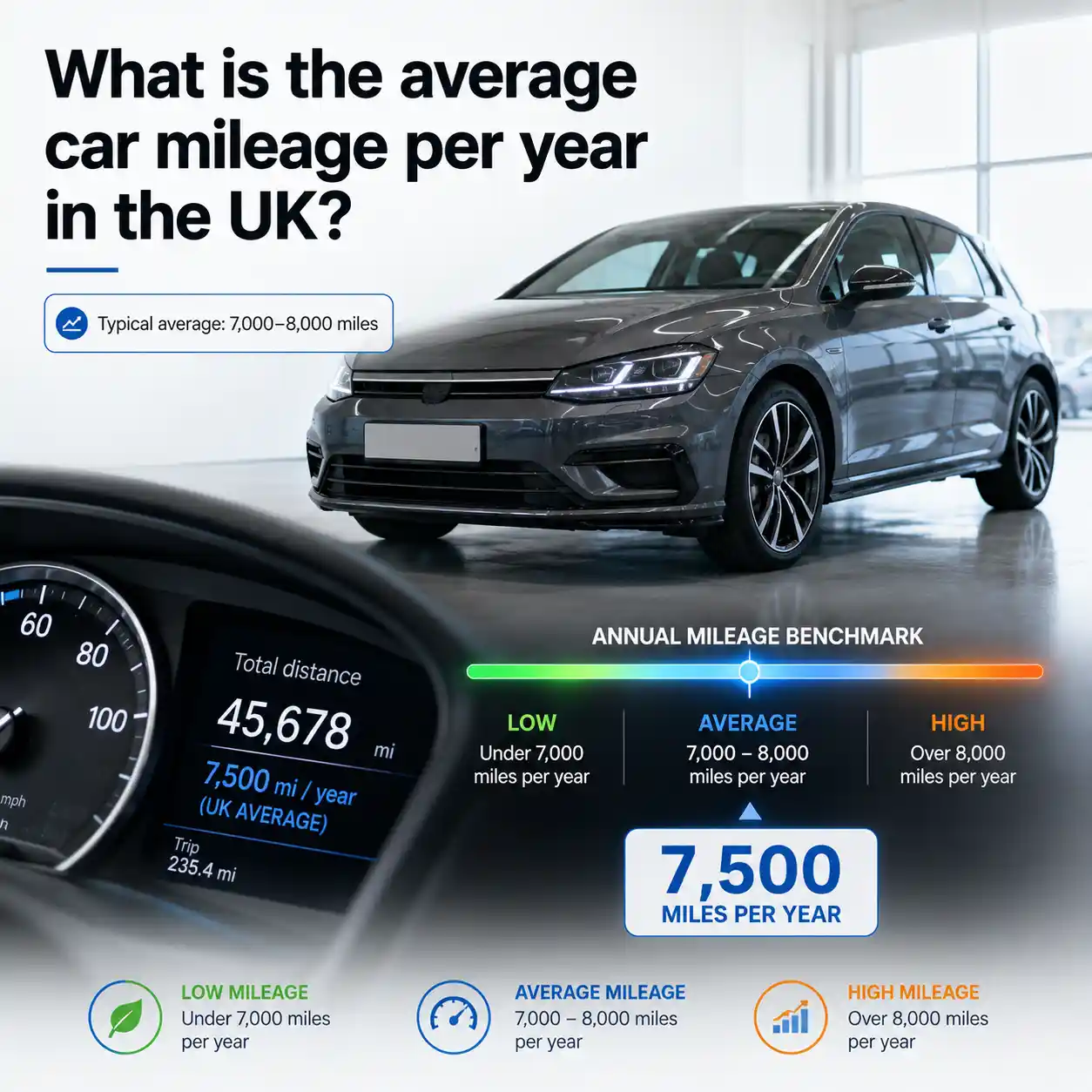
Commonly cited figures put the yearly average at roughly 7,000 to 8,000 miles. These figures have drifted down over the last decade and shift year to year, so treat them as a benchmark rather than a fixed rule. To estimate the mileage you would expect on a given car, multiply its age in years by about 7,500. A car a few thousand miles off that estimate is normal; one that is tens of thousands of miles adrift is worth a closer look.
Does average mileage vary by fuel type?
Yes, and the pattern is consistent even as the exact figures move.
Diesels usually cover the most, because they are chosen by higher mileage drivers and suit long motorway runs.
Petrol cars sit around or just below the overall average.
City and small petrol cars often cover less, as they are used for shorter trips.
Electric cars vary widely by household, and averages are still settling as the fleet grows, so lean on the individual car records rather than a fuel-type figure.
Is this mileage high or low for the age?
Use the age of the car to set expectations. The bands below are a rough guide built on an average of 7,500 miles a year. They are a starting point, not a verdict.
Car age | Low | Average (approximate) | High |
|---|---|---|---|
3 years | Under 15,000 | 22,500 | Over 35,000 |
5 years | Under 25,000 | 37,500 | Over 55,000 |
8 years | Under 40,000 | 60,000 | Over 85,000 |
10 years | Under 50,000 | 75,000 | Over 105,000 |
12 years | Under 60,000 | 90,000 | Over 125,000 |
A reading in the low column is not automatically a bargain. If it looks too low for the age and condition, treat it the same way you would a high reading: check the record.
What counts as high mileage?
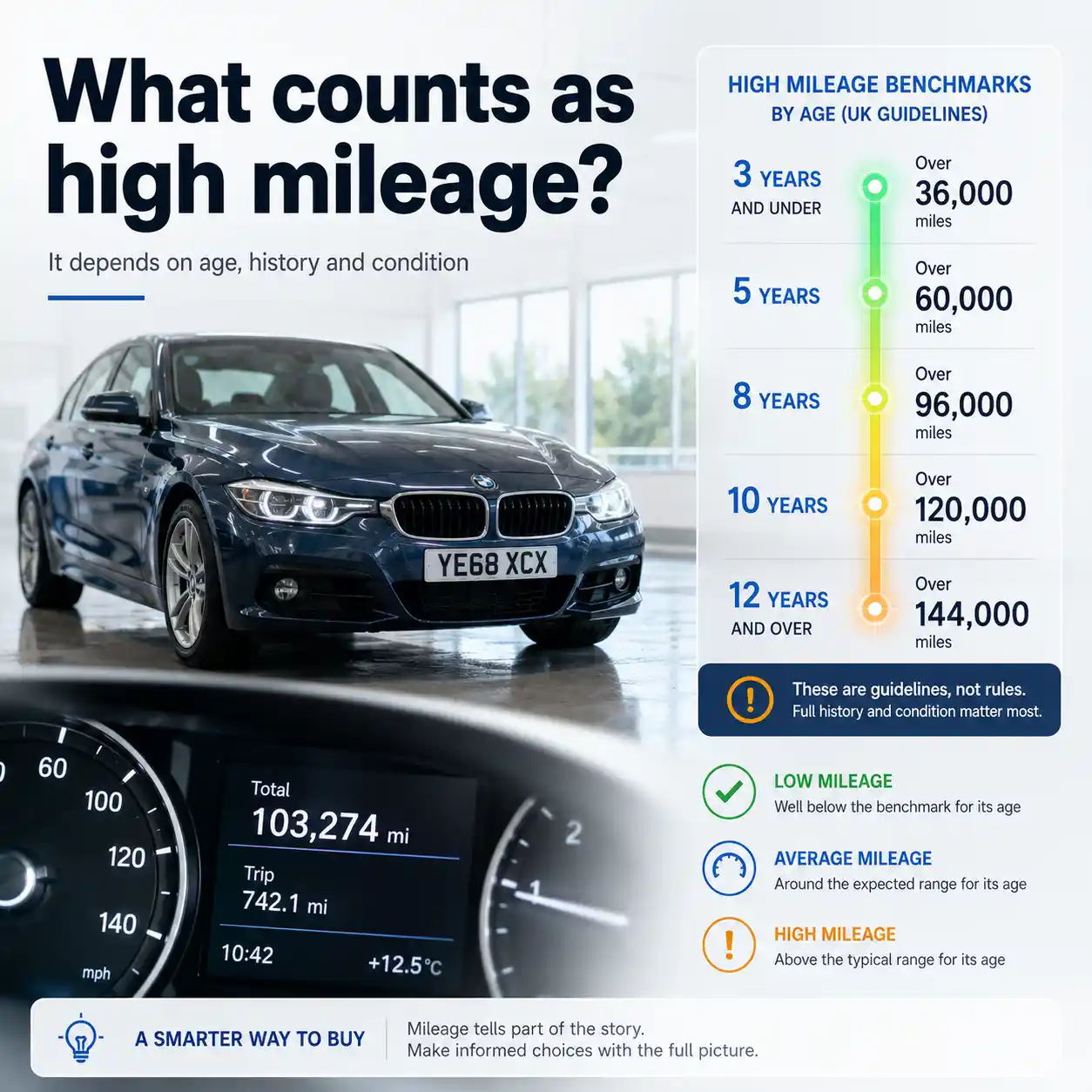
Traditionally, over 100,000 miles was seen as high. That matters less now. A well-serviced diesel or a modern petrol can pass 150,000 miles in good health, while a neglected low mileage car can be in worse shape. What counts as high depends on the model, the service history and how the miles were put on.
Do motorway miles matter more than town miles?
How the miles were covered matters as much as the number. Steady motorway miles are gentler on the engine, clutch and brakes than the same distance in stop-start town traffic, where the car works harder and wears faster. A 90,000 mile motorway car can be in better shape than a 60,000 mile city car. Ask how and where the car was driven, and look for a pattern of long, regular journeys in the service history.
Is high mileage bad when buying a used car?
Not on its own. A higher mileage car with full service history and clean condition can be a better buy than a low mileage car with gaps in its records. Judge mileage alongside service history, MOT history and the physical state of the car.
Why can very low mileage be a warning sign?
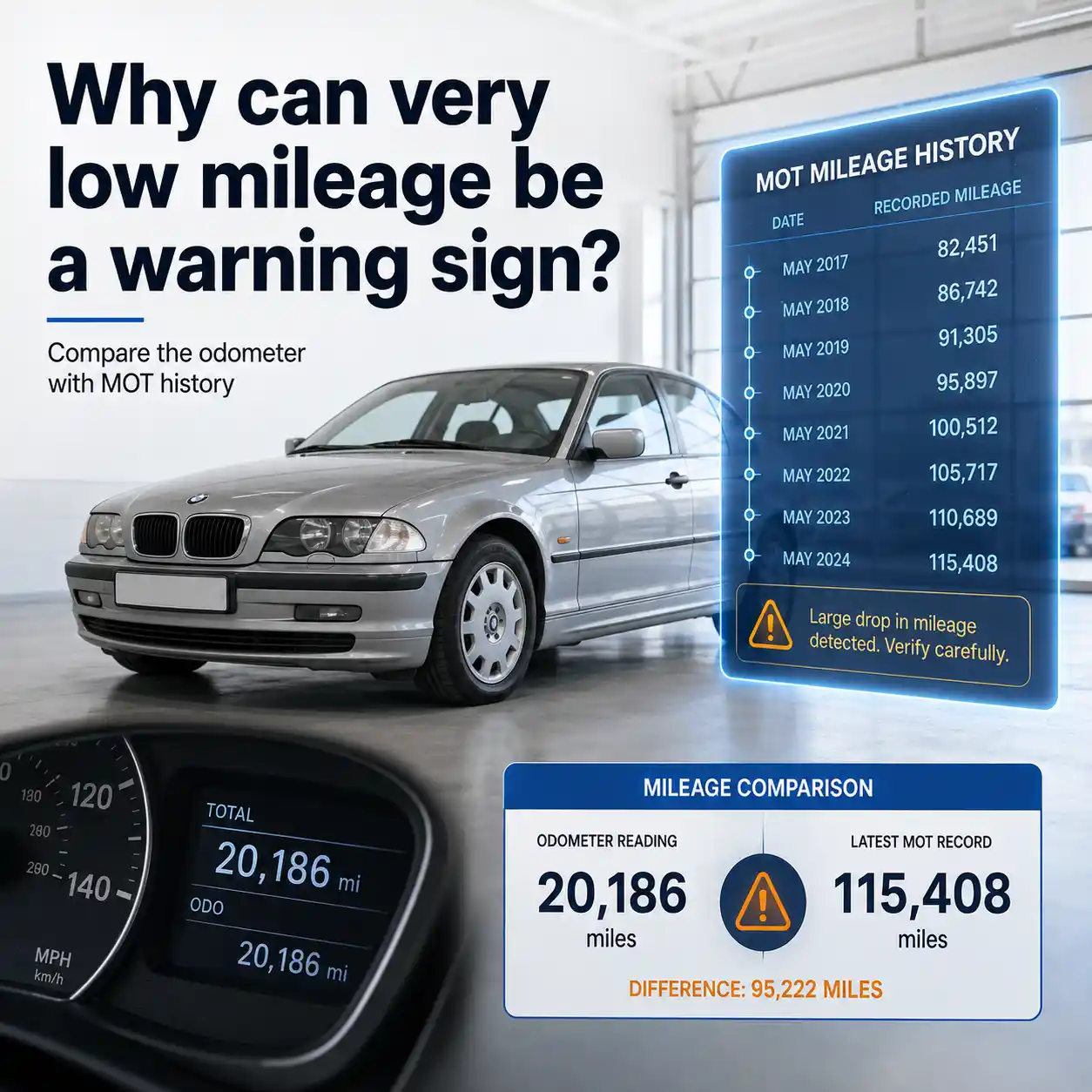
A reading that looks too low for the car age is one of the clearest signs of clocking. If a ten year old car shows 20,000 miles, ask why, and check the record. Very low genuine mileage can also mean long spells standing still, which perishes tyres, seals and brake discs. Running a mileage check by registration lets you compare the reading against the MOT mileage timeline before you trust it.
How does mileage affect value and depreciation?
Mileage is one of the biggest factors in a used car price after age and condition. Two cars of the same age and trim can differ by hundreds or thousands of pounds on mileage alone, and cars that cross round numbers such as 60,000 or 100,000 often step down in value. Lower genuine mileage usually means a higher price, which is exactly why clocking exists. Confirming the mileage is real protects both the price you pay and what you recover when you sell.
Compliance note: REGUP reports are data checks from available DVLA and DVSA sources, with trusted provider data for premium checks. They are not legal, financial or mechanical advice. Source availability can vary by vehicle.
Frequently asked questions
Is 100,000 miles too much for a used car?
Not necessarily. With full service history and good condition, many cars run well beyond 100,000 miles. Weigh mileage against how the car has been maintained and how the miles were covered.
Does low mileage always mean a better car?
No. Very low mileage can mean long periods standing still, which can perish seals and tyres. It can also be a sign the reading has been altered.
What is good mileage for a used car?
Roughly 7,500 miles per year of age is the UK benchmark. Well below that is worth checking, and well above it is fine if the service history and condition support it.
Do electric cars have different average mileage?
Electric car mileage varies widely by household and the averages are still settling as the fleet grows. Judge an individual EV on its own records rather than a fuel-type average.
How do I know if the mileage is genuine?
Compare the odometer with the MOT mileage record and the service history. A free mileage check by registration brings the available records together so you can see the trend.