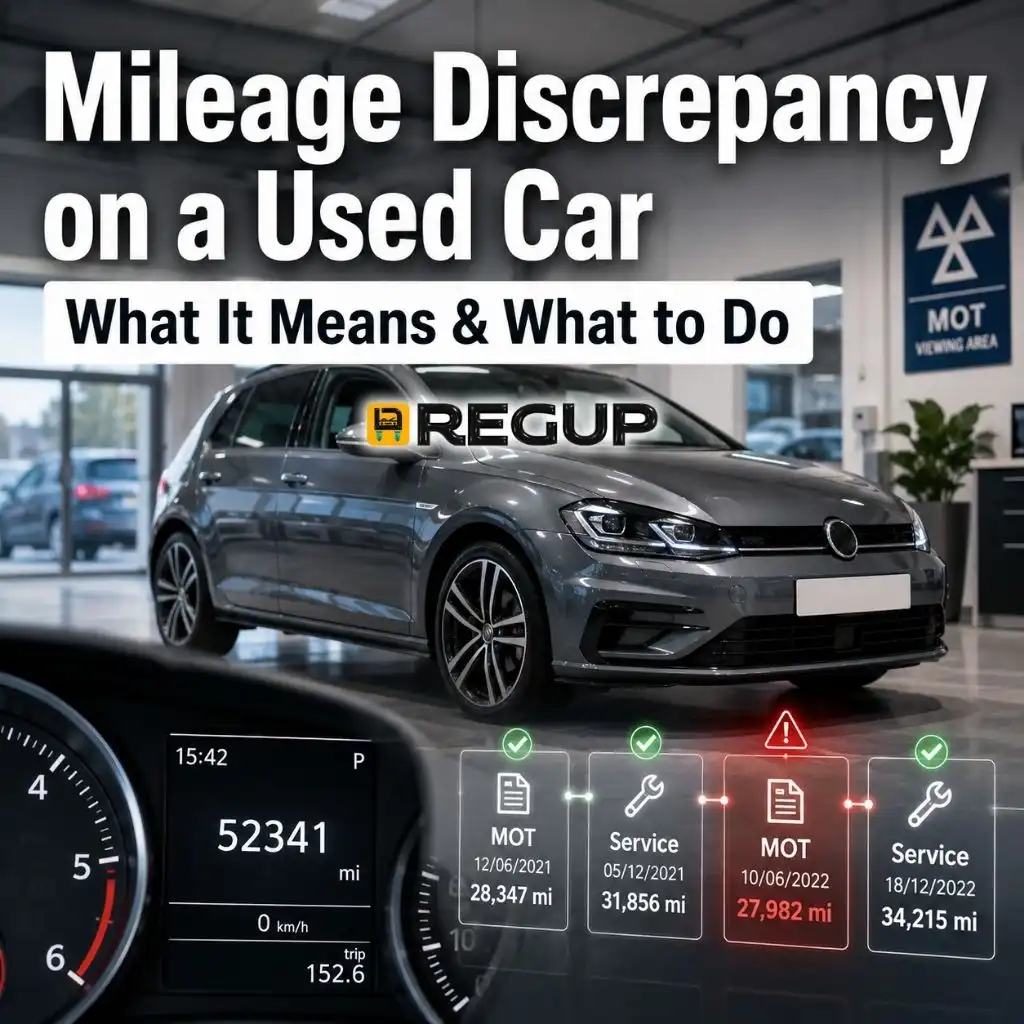
Key points
- Mileage should only ever rise — any fall, stall or unusual jump is a discrepancy
- Innocent causes include instrument cluster swaps and MOT data-entry errors
- Suspicious causes include clocking and undisclosed import history
- Ask for written explanation and documentation before buying
- A documented explanation protects resale value later
Mileage Discrepancy on a Used Car: What It Means and What to Do
A mileage discrepancy is a gap, drop or unexpected jump in a car recorded mileage across its MOT and service history. Some discrepancies have innocent causes, such as a replaced instrument cluster, but others point to clocking. Checking the mileage record by registration helps you see the pattern before you commit to buying.
What is a mileage discrepancy?
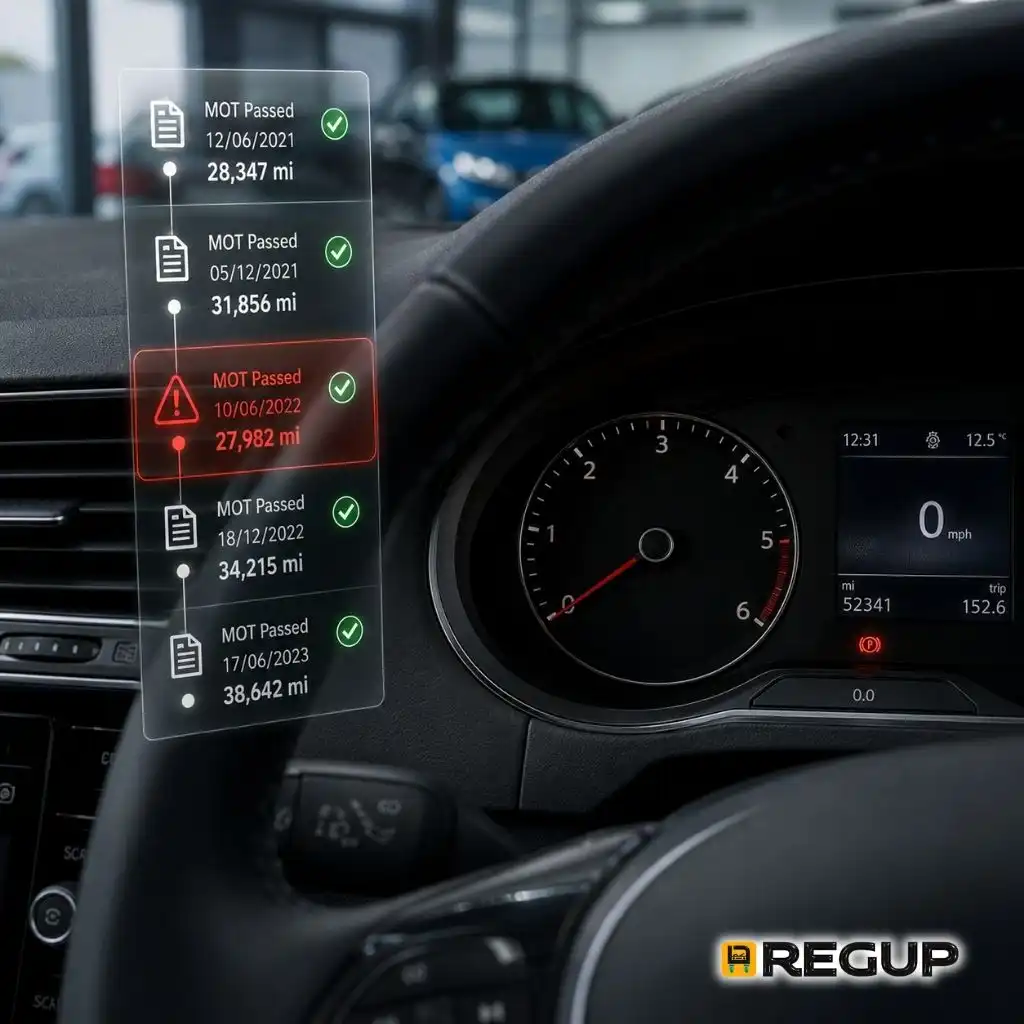
A mileage discrepancy, sometimes called a mileage anomaly or inconsistency, is any point where the recorded mileage does not line up as expected. Mileage should only ever rise. A reading that falls, stalls oddly or leaps far beyond normal use is a discrepancy worth explaining.
What causes a mileage discrepancy?
Not every discrepancy is fraud. Causes fall into two groups.
Innocent causes
A replacement instrument cluster or dashboard that reset the reading.
An engine or gearbox swap recorded against a different mileage.
A typing error entered by a garage at MOT time.
Miles and kilometres confused on an imported vehicle.
Suspicious causes
Clocking, where the odometer has been wound back to raise the price.
Odometer tampering hidden by missing paperwork.
An undisclosed import or export history that breaks the mileage trail.
Is a mileage discrepancy always clocking?
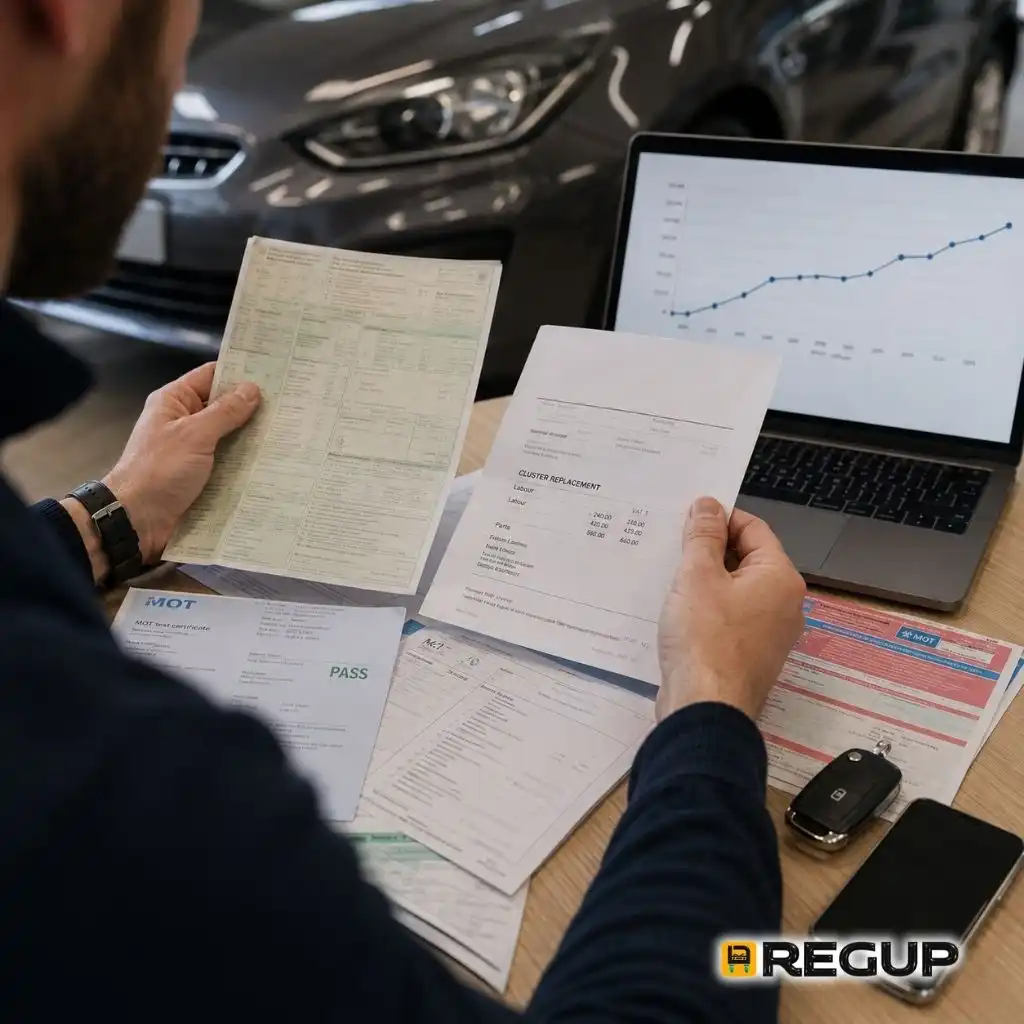
No. A genuine repair can explain a reset, and honest sellers keep the invoice to prove it. The difference is evidence. A seller who can produce records and account for the change is usually fine. A seller who cannot, or who becomes defensive, is the risk.
What should you do if you find a mileage discrepancy?
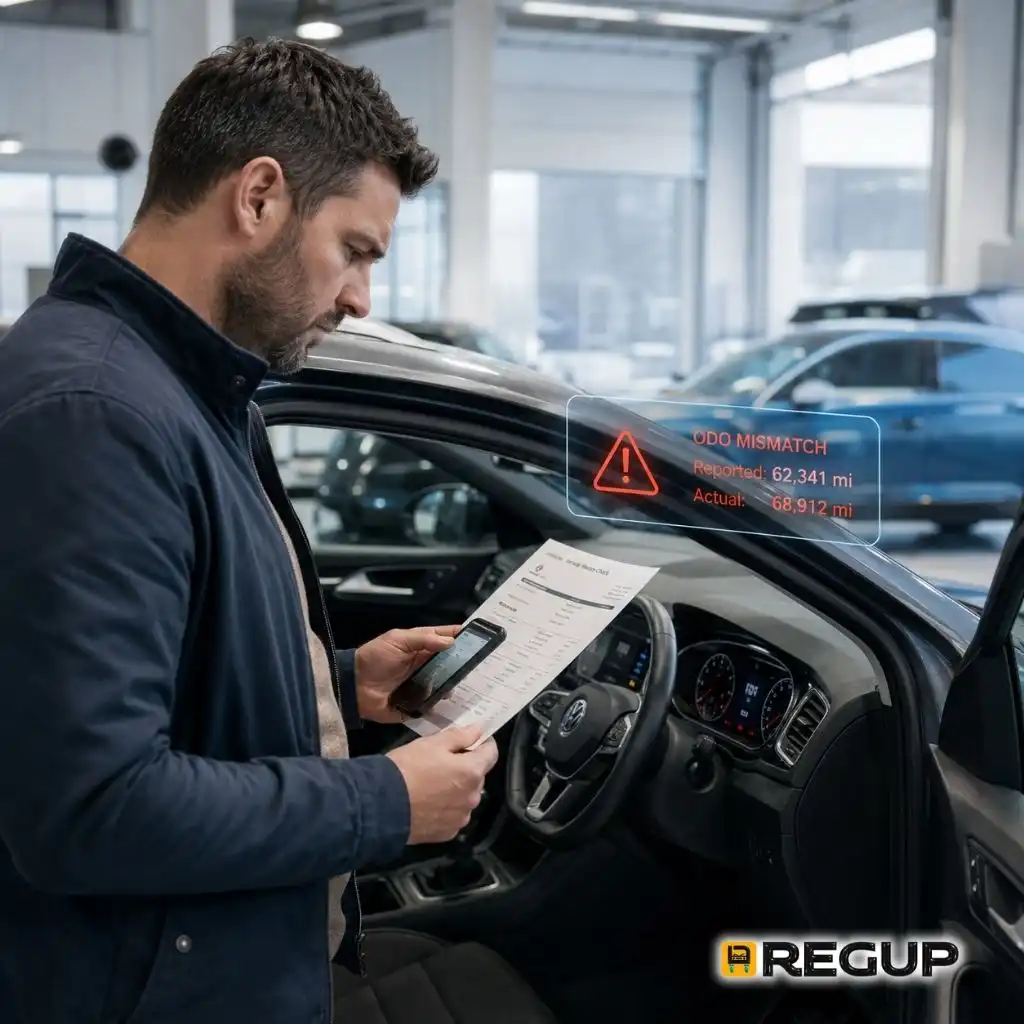
Slow the sale down and gather evidence before any money changes hands.
Ask the seller to explain the discrepancy in writing.
Request the service records and MOT certificates.
Cross-check the V5C and any cluster-replacement invoice.
Run a full history check for finance, stolen and write-off data.
Walk away if the explanation does not hold up.
Does a mileage discrepancy affect value or resale?
Yes. Even where the cause is innocent, an unexplained discrepancy lowers buyer confidence and can reduce what the car fetches later. Buying with a documented explanation protects you when you come to sell.
Compliance note: REGUP reports are data checks from available DVLA and DVSA sources, with trusted provider data for premium checks. They are not legal, financial or mechanical advice. Source availability can vary by vehicle.
Frequently asked questions
What is a mileage anomaly on an MOT?
It is a recorded reading that does not fit the expected pattern, usually a drop or an unusually large jump between tests. It is a prompt to ask questions, not proof of fraud on its own.
Can a mileage discrepancy be corrected?
The record itself is not edited, but a genuine cause such as a cluster replacement can be documented with an invoice. Keep that paperwork with the car.
Should I buy a car with a mileage discrepancy?
Only if the seller can explain it with evidence and the physical condition matches. If the explanation is vague or missing, treat it as a reason to walk away.
Who do I report suspected clocking to?
Contact Citizens Advice, who refer cases to Trading Standards. Keep the advert, messages and any receipts as evidence.