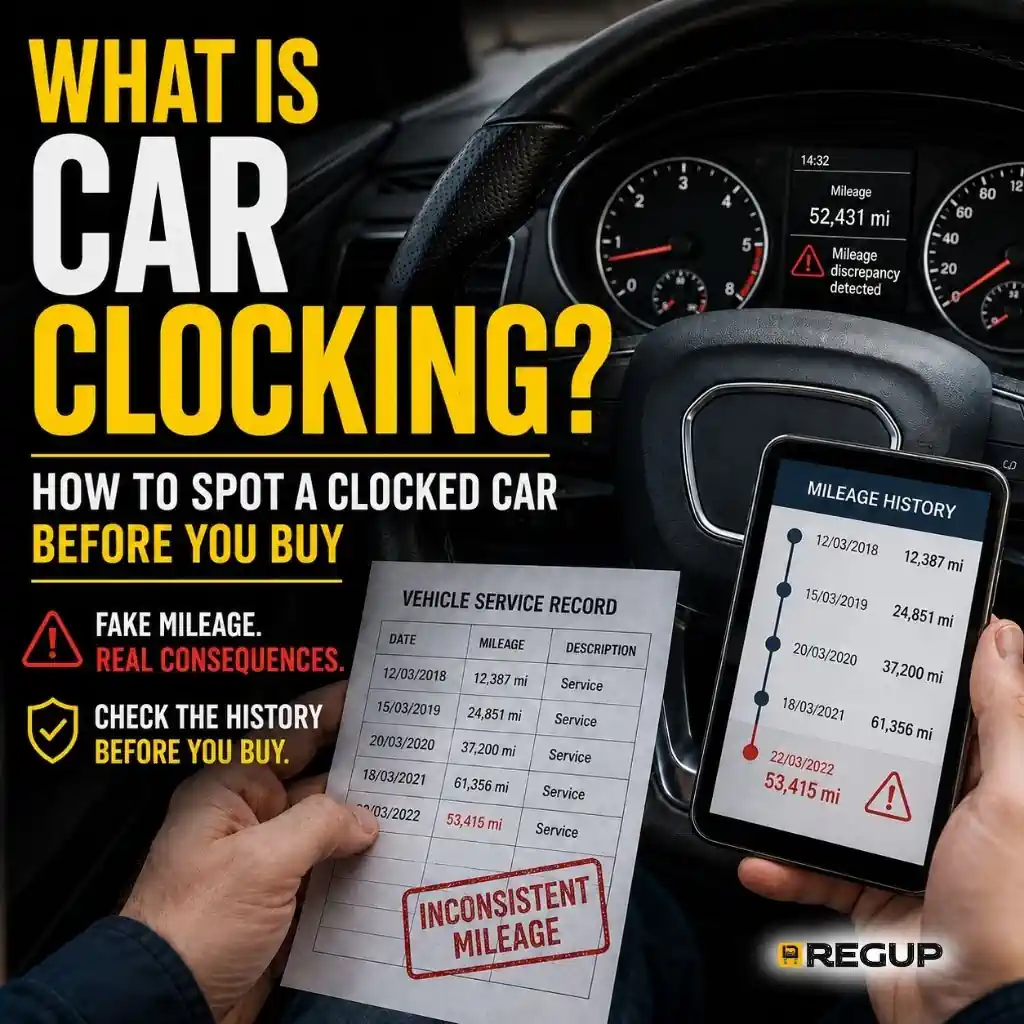
Key points
- Car clocking means altering the odometer to show fewer miles than the car has actually done
- Digital odometers can be clocked with plug-in tools and leave no visible trace on the dashboard
- Adjusting a reading isn't illegal on its own — selling without disclosing the true mileage is
- Compare the odometer against MOT history, service records and the V5C for mismatches
- Wear that exceeds the reading (pedals, seats, steering wheel) is a common physical tell
What Is Car Clocking? How to Spot a Clocked Car Before You Buy
Car clocking is the practice of winding back a vehicle odometer so it shows fewer miles than the car has actually covered. A clocked car looks like it has done less work than it really has, which pushes up the price and hides genuine wear. Checking the mileage record by registration is the fastest way to spot it.
What does clocking mean?
Clocking, also called odometer tampering, is altering the mileage reading on a vehicle so it shows fewer miles than the car has done. The motive is always the same: mileage is one of the biggest factors in a used car price, so a lower reading raises the asking price. Removing tens of thousands of miles can add several hundred to a few thousand pounds, which is why it remains a common form of used-car fraud.
How does car clocking happen?
The method depends on the odometer type. Both are still on UK roads.
Mechanical odometers, found on older cars, use physical dials that can be wound back by hand with the right tools.
Digital odometers store the reading on the car electronics. It can be changed in minutes with cheap plug-in devices and software sold openly online.
So-called "mileage correction" services advertise this work. Adjusting a reading is not the offence in itself. Selling the car afterwards without disclosing it is.
Because digital tampering leaves no obvious physical trace, you cannot judge a modern car by the dashboard alone. The evidence lives in the records, not the display.
Is car clocking illegal in the UK?
Adjusting a mileage reading is not automatically a crime, which is why correction services can operate legally. The offence is selling a vehicle without telling the buyer the true mileage. That breaches the Consumer Protection from Unfair Trading Regulations 2008, and it can also amount to fraud or misrepresentation.
Trader or dealer sale: Your position depends on who you bought from.
You are covered by the Consumer Rights Act 2015 and the 2008 Regulations. A clocked car is not "as described", so you can seek a repair, replacement, refund or compensation.
Report the trader to Citizens Advice, who pass details to Trading Standards.
Private sale: Private sales carry fewer automatic rights. The car must still be "as described", so if the seller stated a false mileage in the advert or in writing, you may have a claim. This is general information and not legal advice.
How do you spot a clocked car?
Look for a mileage reading that does not match the age and condition of the car. The clues are usually physical and documentary at the same time.
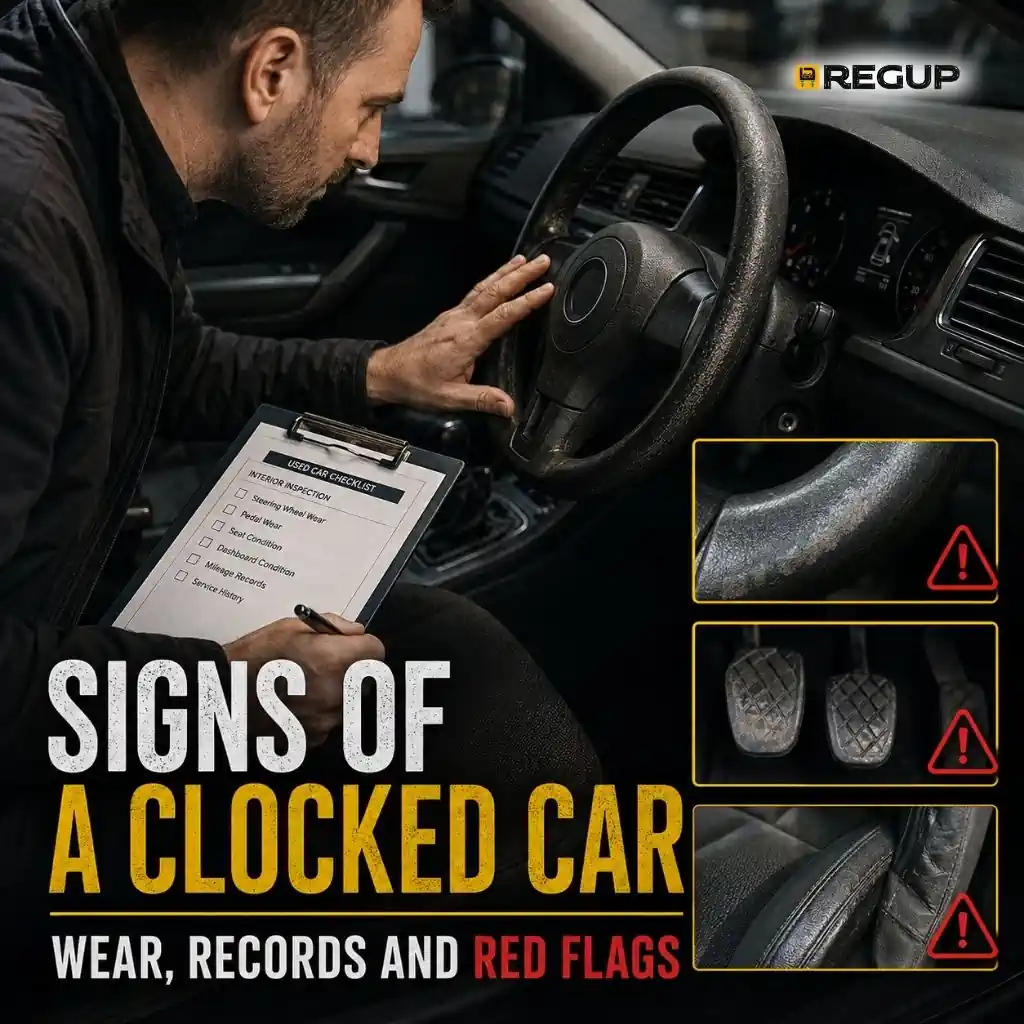
The mileage looks too low for the car age. As a rough guide, expect around 7,000 to 8,000 miles a year.
Worn pedals, a shiny or re-covered steering wheel, or sagging seats against a low reading.
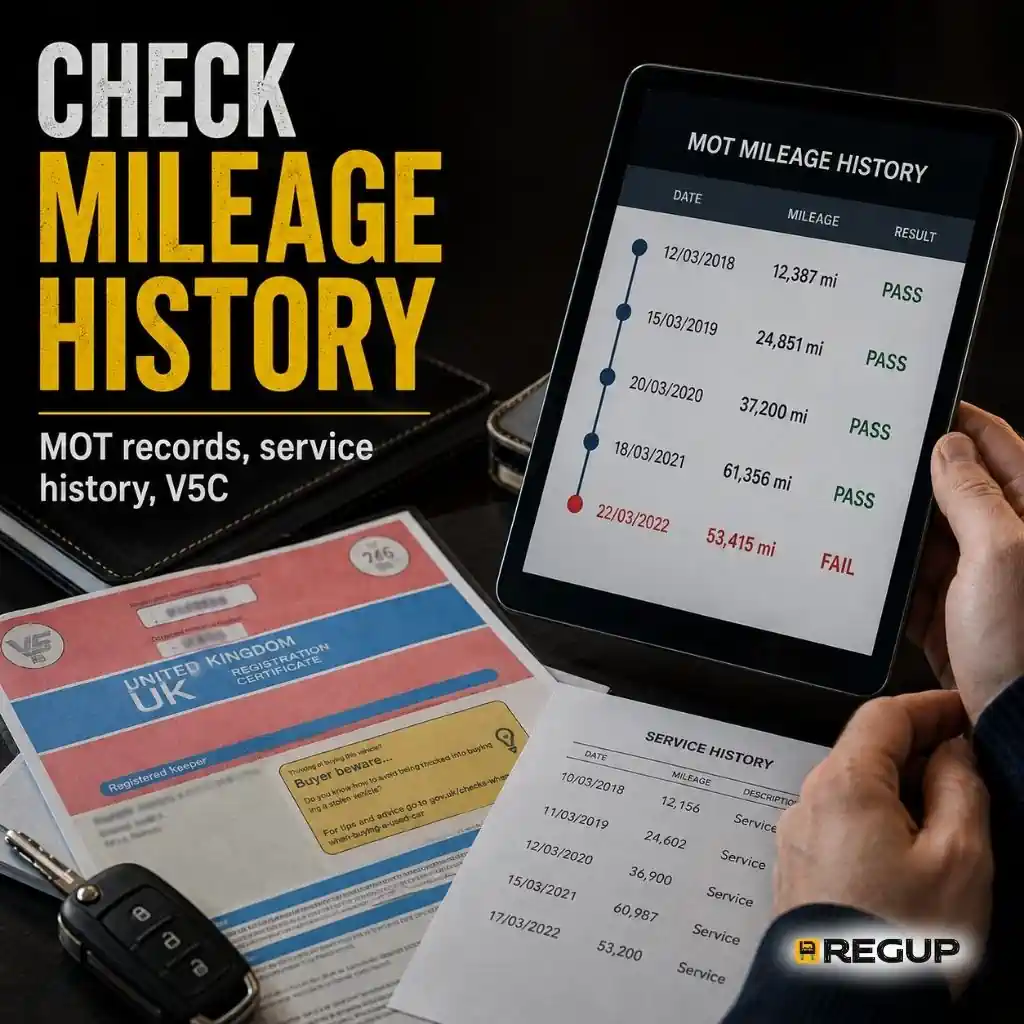
The recorded mileage drops, stalls oddly, or jumps between MOT tests.
Service history has missing years or no stamps to back up the mileage.
A heavily used looking car priced suspiciously low, or a quick sale with vague answers.
A replacement steering wheel, gearknob or pedals on a supposedly low mileage car.
Stone chips, tyre wear or brake wear that looks like far more miles than the reading shows.
Clocked or genuinely low mileage?
Low mileage is not a red flag on its own. The difference is whether the records and the condition support it. Use this to weigh it up.
Signal | Genuine low mileage | Possible clocking |
|---|---|---|
MOT record | Rises steadily, no drops | A drop or an odd jump |
Service history | Full, with matching mileages | Gaps or no stamps |
Wear vs reading | Wear matches the miles | Wear far exceeds the reading |
Seller answers | Clear, backed by paperwork | Vague or defensive |
Price | In line with the market | Too low for the condition |
How do you check if a car has been clocked?
Cross-check the odometer reading against the mileage logged at each MOT, the service invoices and the V5C. If the numbers ever fall or the jumps look wrong, treat it as a red flag. The quickest first step is to run a free mileage check by registration, which brings the available mileage records together so you can see the pattern before you view or pay a deposit.
What does buying a clocked car cost you?
The damage is more than the inflated price. A clocked car has done more work than its reading suggests, so parts wear out sooner than you expect and service intervals are wrong. Cambelts, clutches and suspension may be closer to failure than the mileage implies, which is a safety and cost risk as well as a money one. You also lose out at resale, because the true mileage tends to surface in the records later.
What should you do if you suspect clocking?
Slow the sale down before any money changes hands.
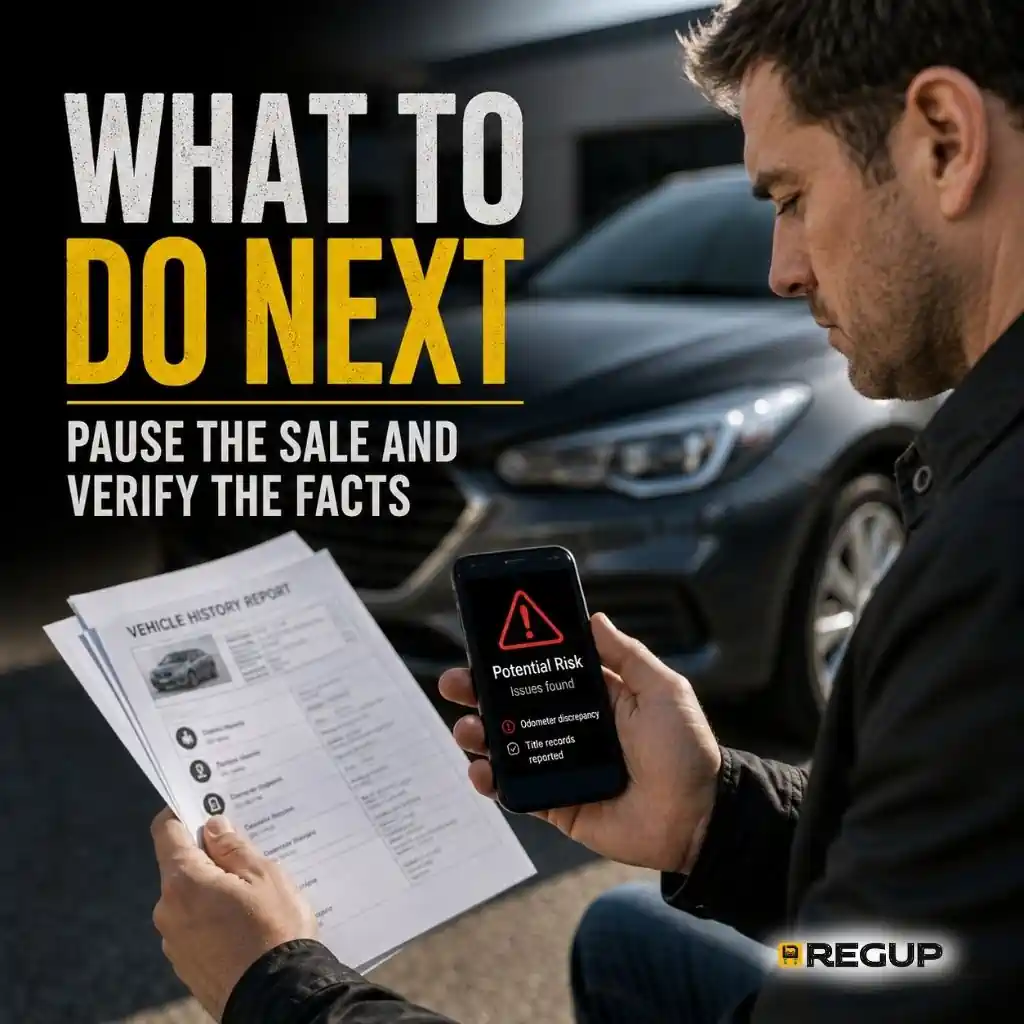
Ask the seller to explain the mileage in writing.
Request the full service records and MOT certificates.
Cross-check the V5C and any invoice for a replaced instrument cluster.
Run a mileage check and, for fuller cover, a finance, stolen and write-off check.
Walk away from pressure selling or an explanation that does not hold up.
Frequently asked questions
Can you always tell if a car has been clocked?
No. A mileage check and MOT history reveal many cases, but no online report can guarantee it detects every alteration, especially tampering between recorded readings. Combine the check with a physical inspection.
Is mileage correction legal?
Adjusting a reading, for example after fitting a replacement instrument cluster, is not illegal in itself. Selling the car afterwards without disclosing the change or the true mileage is what breaks the law.
How much can clocking add to a car price?
It varies by model, but removing tens of thousands of miles can add several hundred to a few thousand pounds to the asking price, which is why it happens.
Can you clock a digital odometer?
Yes. Digital readings can be altered with plug-in tools, and it leaves no physical trace on the dashboard. That is why the records matter more than the display.
What are my rights if I bought a clocked car?
From a trader, the Consumer Rights Act 2015 and the 2008 Regulations mean the car is not as described, so you can seek a repair, refund or compensation. Private sales carry fewer rights but the car must still match its description.
Does an MOT show mileage history?
Yes. From the third year, mileage is recorded at each MOT test, so the record shows a timeline you can check for drops or gaps.