Key points
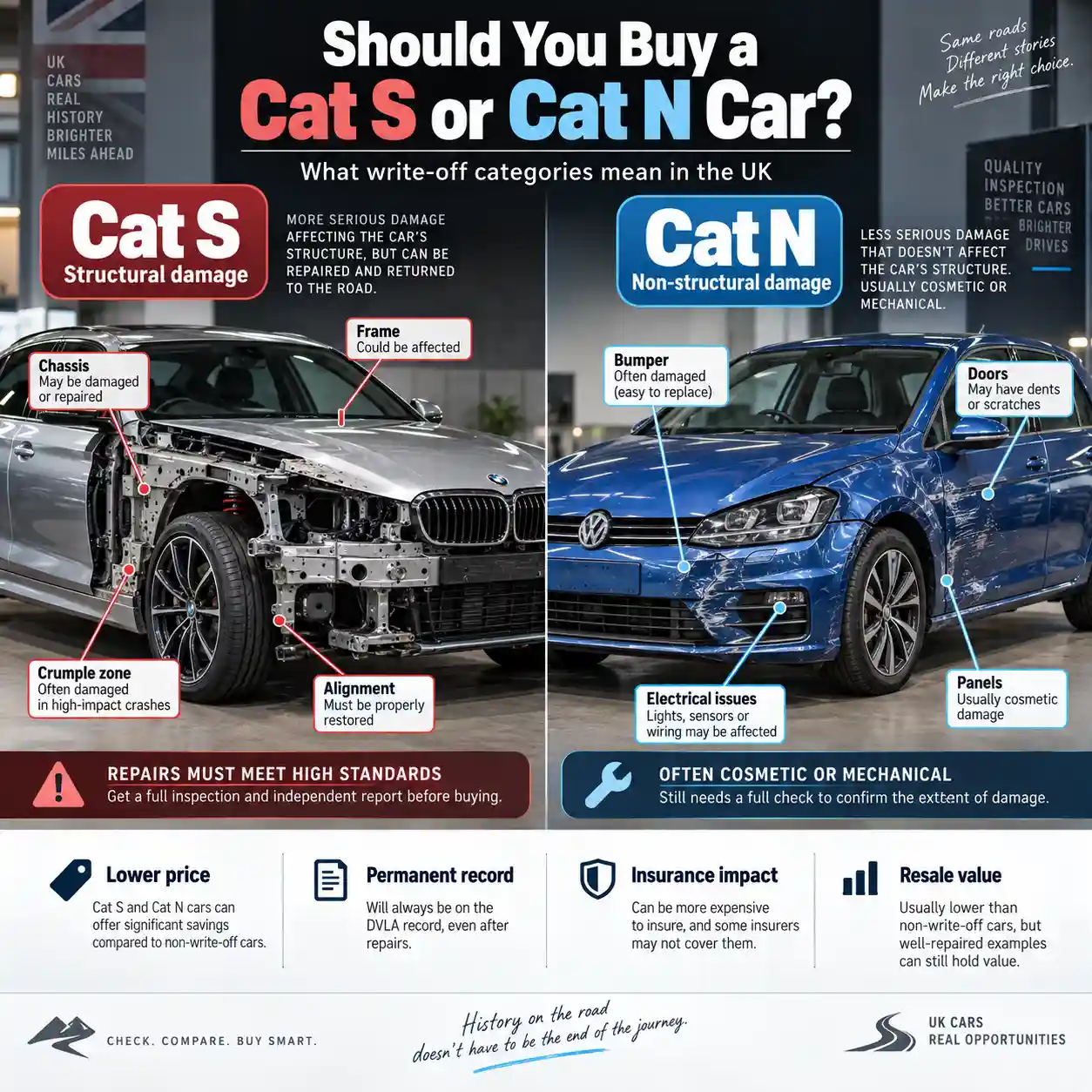
- Cat S means structural damage; Cat N means non-structural damage
- Both categories can be legally repaired and returned to the road
- Typical discounts range from 20 to 40 percent depending on model and damage
- The write-off marker is permanent and affects resale and insurance
- Get an independent engineer inspection and repair invoices before buying
- Run a write-off check by registration before you commit
What do the write-off categories mean?
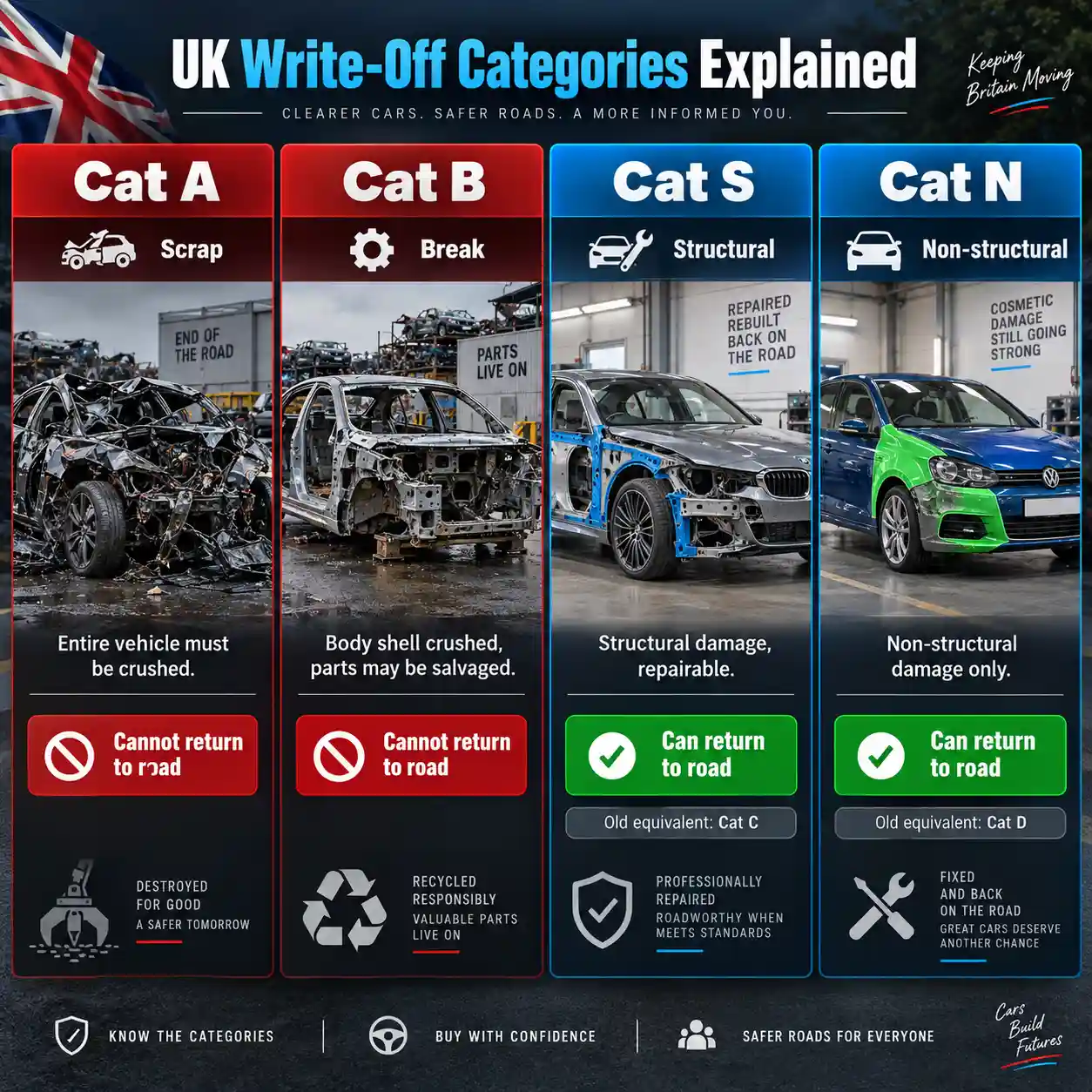
UK insurers assign one of four categories when they declare a vehicle a total loss. The categories changed in October 2017, so older cars may carry the previous labels.
Category | Damage type | Can I return to the road? | Old equivalent |
|---|---|---|---|
Cat A (Scrap) | Entire vehicle must be crushed | No | -- |
Cat B (Break) | Body shell crushed, parts can be salvaged | No | -- |
Cat S (Structural) | Structural damage, repairable | Yes | Cat C |
Cat N (Non-structural) | Non-structural damage only | Yes | Cat D |
Why are Cat S and Cat N cars cheaper?
The discount exists because insurers decided the repair cost exceeded the car value (or came close enough to make it uneconomical). The car is sold at salvage auction, repaired by a bodyshop or trader, and relisted for sale. Buyers pay less because the write-off history is permanently on the record and affects resale, insurance and buyer confidence. Typical discounts range from 20 to 40 percent depending on the model and the nature of the damage.
What are the risks of buying a Cat S car?
Cat S means the structural frame, chassis or crumple zones were damaged. Even after repair, questions remain.
The structural integrity of the repair depends entirely on the quality of the work. A poor repair can compromise crash safety.
There is no mandatory independent inspection before a Cat S car returns to the road. The repairer decides when it is roadworthy.
Resale value drops significantly. A Cat S marker stays on the record permanently and many private buyers will not consider it.
Some insurers charge higher premiums or decline to cover Cat S vehicles.
Hidden damage may not be visible after a cosmetic repair. Alignment, corrosion and weld quality are hard to assess without specialist equipment.
What are the risks of buying a Cat N car?
Cat N means no structural damage was found. The write-off was for non-structural reasons such as cosmetic panels, electrical faults, theft-related damage or mechanical components. The risks are generally lower than Cat S, but they are not zero.
The cost of repair may have been high even without structural damage (electrical or mechanical work can be expensive).
The same resale and insurance effects apply, though typically less severe than Cat S.
The reason for the write-off matters. A car written off for a cracked bumper is very different from one written off for extensive electrical damage after a flood.
When can buying a Cat S or Cat N car make sense?
It can be a reasonable decision in specific circumstances.
You have an independent engineer inspection report confirming the repair quality.
You are buying from a reputable repairer who provides documentation of the work done.
The discount is large enough to offset the resale loss and any insurance premium increase.
You plan to keep the car long-term and are not concerned about resale value.
The damage was minor relative to the category, for example a Cat N for a single panel replacement.
How do you check if a car has been written off?
Run a write-off check by registration. REGUP searches available insurance records and flags any write-off category linked to the vehicle. The existing blog on the site covers Cat S vs Cat N in more detail. Always check before buying, because sellers are not always upfront about write-off history.
What should you do if you find a write-off marker?
Do not panic, but do not ignore it either.
Ask the seller for full details of the damage and the repair.
Request invoices, photographs and any engineer reports from the repair.
Get an independent inspection from a qualified engineer before committing.
Check insurance quotes before buying, as some insurers decline or load premiums for Cat S.
Factor the permanent record into the price you are willing to pay.

Compliance: REGUP reports are data checks from available DVLA and DVSA sources, with trusted provider data for premium checks. Not legal, financial or mechanical advice. REGUP is not DVLA, DVSA or GOV.UK.
Frequently asked questions
Is it legal to sell a Cat S or Cat N car?
Yes. Cat S and Cat N cars can be legally repaired and sold. The seller should disclose the write-off history, but not all do, which is why a write-off check matters.
Does a Cat N marker affect insurance?
It can. Some insurers charge higher premiums, and a small number may decline cover. Always check quotes before buying.
Can a write-off marker be removed?
No. Once a vehicle is categorised, the marker is permanent on the insurance record. It cannot be removed even after a full repair.
What is the difference between Cat C and Cat S?
Cat C was the old category for vehicles where the repair cost exceeded the value. Cat S replaced it in October 2017 and specifically refers to structural damage. Cars categorised before October 2017 keep their original label.
Should I buy a Cat S car as my first car?
It is higher risk for a first car because you may not have the experience to assess repair quality. If you do consider it, get an independent engineer inspection and budget for the possibility of hidden issues.