Key points
- Fitting a number plate takes about 20 minutes
- Use sticky pads, screws or both depending on your bumper and security needs
- Cut old pads with fishing line or dental floss, never lever against the paint
- Drill screw holes in the margin or between character groups, never through a character
- Fit white screw caps on the front plate and yellow caps on the rear
- Keep the plate upright, lit at the rear and fully readable
- Loose plates, screw heads in characters and cracked plates all fail an MOT
- Bike plates need screws with rubber or nylon washers to absorb vibration
How to Fit Number Plates
Fitting number plates takes about 20 minutes with the right fixings. You can use double sided sticky pads, screws, or both, and the choice depends on your bumper, how secure you want the plate and whether you are reusing holes. This guide covers removing the old plate, fitting the new one level and secure, and the fitting mistakes that cause an MOT failure. Plates from our number plate builder can be ordered with pads, a screw and cap kit or anti-theft fixings.
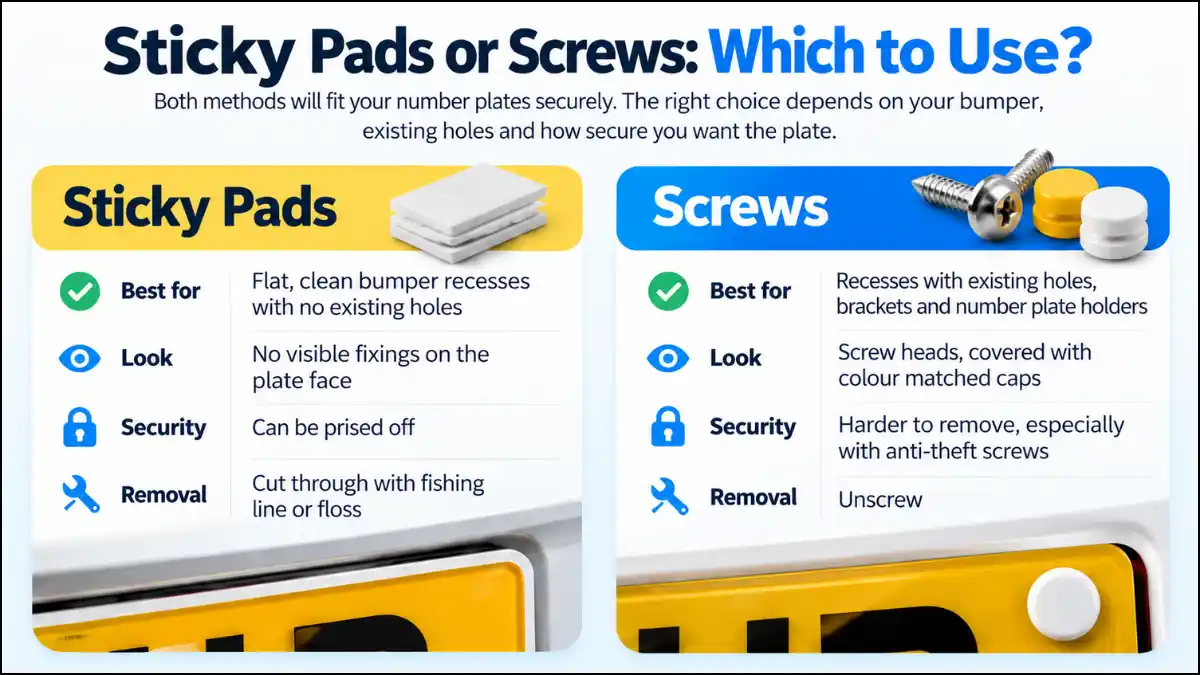
Sticky Pads or Screws: Which to Use
Sticky pads | Screws | |
|---|---|---|
Best for | Flat, clean bumper recesses with no existing holes | Recesses with existing holes, brackets and number plate holders |
Look | No visible fixings on the plate face | Screw heads, covered with colour matched caps |
Security | Can be prised off | Harder to remove, especially with anti-theft screws |
Removal | Cut through with fishing line or floss | Unscrew |
Many fitters use both: pads to hold the plate flat and screws for security. Choose your fixings from our number plate fixing kits.
What You Need
Your new plates and the fixing kit
Screwdriver, and a drill if you need new holes
Masking tape and a pencil for marking
Fishing line or dental floss and adhesive remover for old pad-fitted plates
Alcohol wipes or a degreaser to clean the surface
How to Fit a Number Plate Step by Step
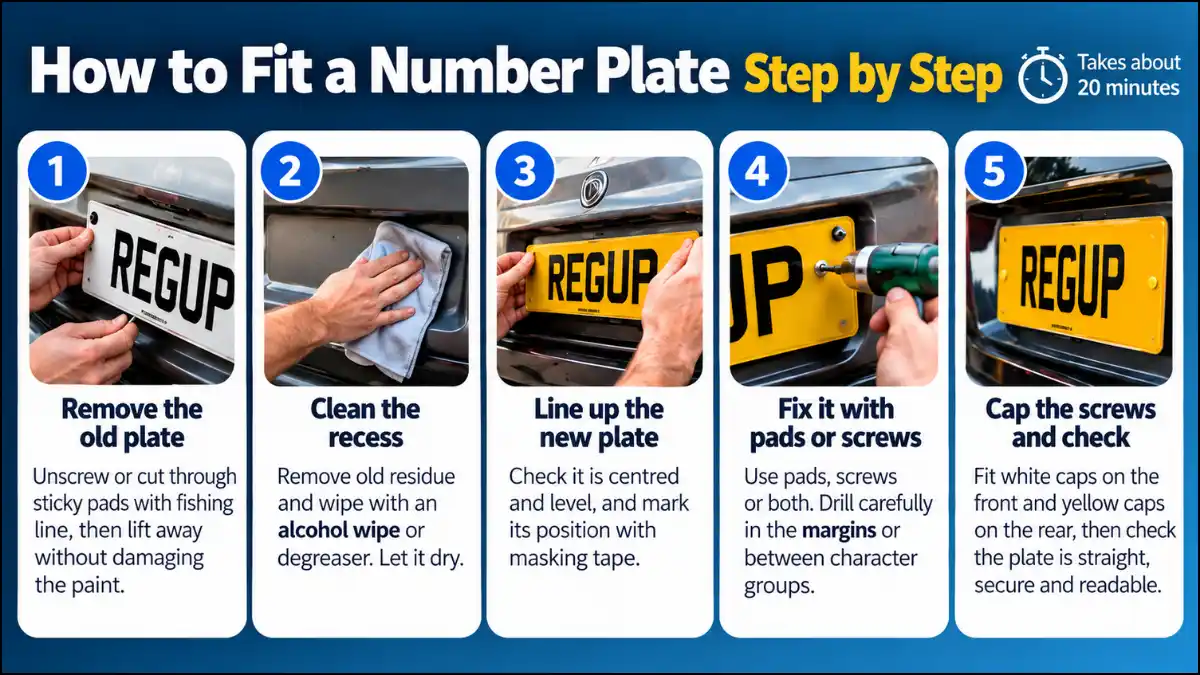
Remove the old plate. Unscrew screw-fitted plates. For pad-fitted plates, slide fishing line or dental floss behind the plate and saw through the pads, then lift the plate away without levering against the paint.
Clean the recess. Peel off old pad residue, use adhesive remover if needed, then wipe the surface with an alcohol wipe and let it dry.
Line up the new plate. Hold the plate in place, check it is centred and level, and mark its position with masking tape.
Fix it with pads or screws. For pads, place them along the back of the plate and press firmly for 30 seconds. For screws, mark the holes in the margins or between character groups, drill carefully and screw in without overtightening.
Cap the screws and check. Fit white caps on the front plate and yellow caps on the rear, then stand back and check the plate is straight, secure and readable.
Where to Drill Number Plate Holes
Put screw holes in the plate margin or in the gap between the two character groups, never through a character. A screw head inside a character can change how it reads, and the MOT inspection manual tells testers to watch for fixing screws that do this. Drill slowly from the front with a sharp bit, and support the plate behind so the acrylic does not crack.
Fit the Plate Upright and Unobstructed
Fit the plate vertically, or as close to vertical as the vehicle allows
Make sure the rear plate is lit by the number plate lamp
Keep tow bars, cycle carriers and surrounds clear of the characters; if a carrier hides the plate, it needs a plate of its own
Use a surround only if it leaves every character and the margin visible
Motorcycle Number Plate Mounting
Bike plates fit to a number plate hanger or tail tidy at the rear. Use screws with rubber or nylon washers so vibration does not crack the plate, and check the tail tidy holds a full size plate without bending or trimming it. The plate must stay upright, lit and readable from behind. Sizes and layouts are on our motorbike number plates page.
Fitting Mistakes That Fail an MOT
A plate loose enough that it could fall off
Screw heads inside characters
A cracked plate from overtightened screws
A tinted cover or a surround that hides part of a character
A plate fitted at an angle to suit a recess it does not fit
Each of these is a major MOT defect, explained in number plate fines and MOT failure. If the plate is the wrong size for the recess, find the right one in plate sizes in mm.
Frequently asked questions
Should I use sticky pads or screws for number plates?
Sticky pads suit a flat, clean recess with no holes and leave the plate face clear. Screws suit recesses with existing holes and are more secure. Many people use both.
How do I remove number plates stuck on with pads?
Slide fishing line or dental floss behind the plate and saw through the pads, then remove the residue with adhesive remover. Avoid levering against the paintwork.
Where should I drill holes in a number plate?
In the margin or the gap between the two character groups, never through a character, so the screw heads cannot change how the registration reads.
Do I need a plate on my bike rack?
Yes, if the cycle carrier hides your rear number plate. The carrier must then carry a plate showing your registration.
Can I fit number plates myself?
Yes. Plates must be made by a registered supplier, but anyone can fit them as long as they end up secure, upright, lit at the rear and fully readable.
How do I fit a motorcycle number plate?
Bolt it to the hanger or tail tidy with screws and rubber or nylon washers to absorb vibration, keeping the plate upright and lit.