Key points
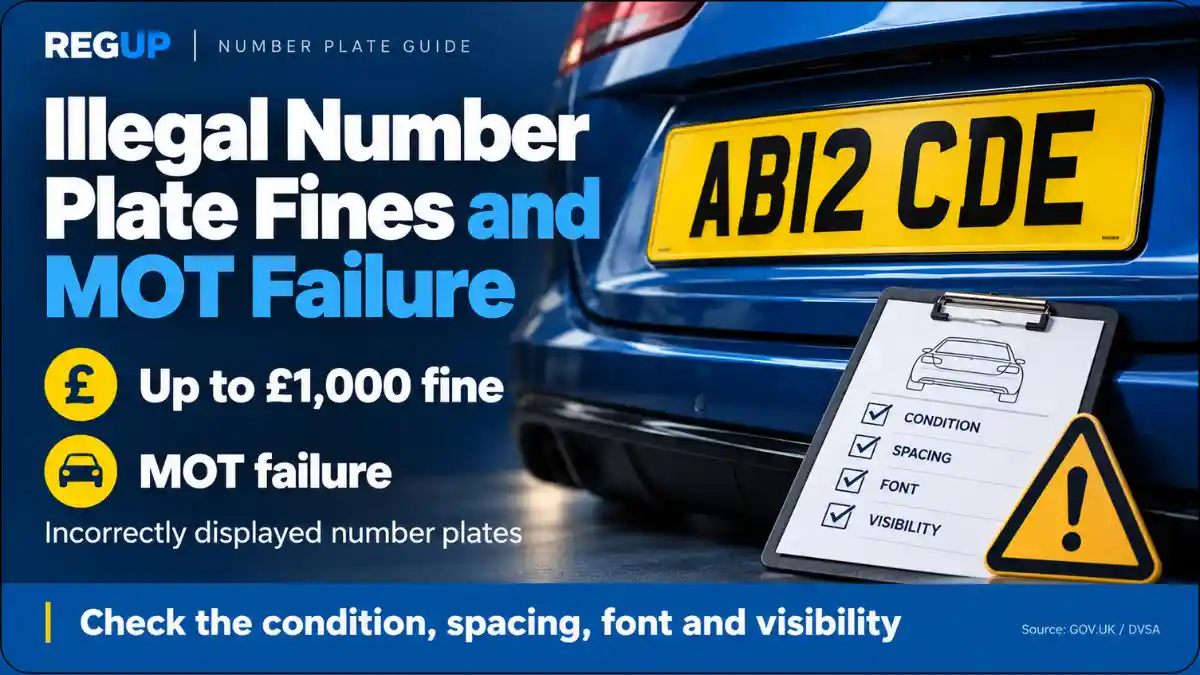
- Incorrectly displayed number plates can mean a fine of up to £1,000
- Every number plate defect is a major fault and fails the MOT
- MOT testers check that plates are present, secure, legible, correct and compliant
- The most common failures are mis-spaced private plates, faded or cracked plates and tinted covers
- Cycle carriers, stickers and tow bars that hide characters can also cause a fail
- The MOT does not check the supplier name, postcode or BS mark, but the law requires them
- Replace a faulty plate with a compliant one from a DVLA registered supplier, then retest
Illegal Number Plate Fines and MOT Failure
Driving with an illegal number plate carries two risks: a fine of up to £1,000 and an automatic MOT failure. Both apply to plates that are the wrong font, mis-spaced, tinted, damaged, obscured or missing. This guide explains how each penalty works, what the MOT tester looks for and how to fix a plate before it costs you. It sits under our uk number plate rules and the law.
The Illegal Number Plate Fine: Up to £1,000
GOV.UK states that you could be fined up to £1,000, and your vehicle will fail its MOT, if you drive with incorrectly displayed number plates. That covers any plate that does not show the registration correctly, including:
Characters moved, re-spaced or altered so the registration reads differently
A non-standard, italic or stylised font
Tinted, smoked or ghost covers, and two tone or outlined characters
A background pattern, picture or carbon fibre effect
A plate that is missing, or so dirty, damaged or covered that it cannot be read
Plates can be spotted by police on patrol and by ANPR cameras that fail to read them, and an unreadable plate can also cause a camera to link a fine to the wrong vehicle. In practice, a driver stopped for a fixable fault is often told to put it right, but repeat or deliberate cases, such as mis-spaced private plates, can be prosecuted.
Number Plate MOT Failure: What the Tester Checks
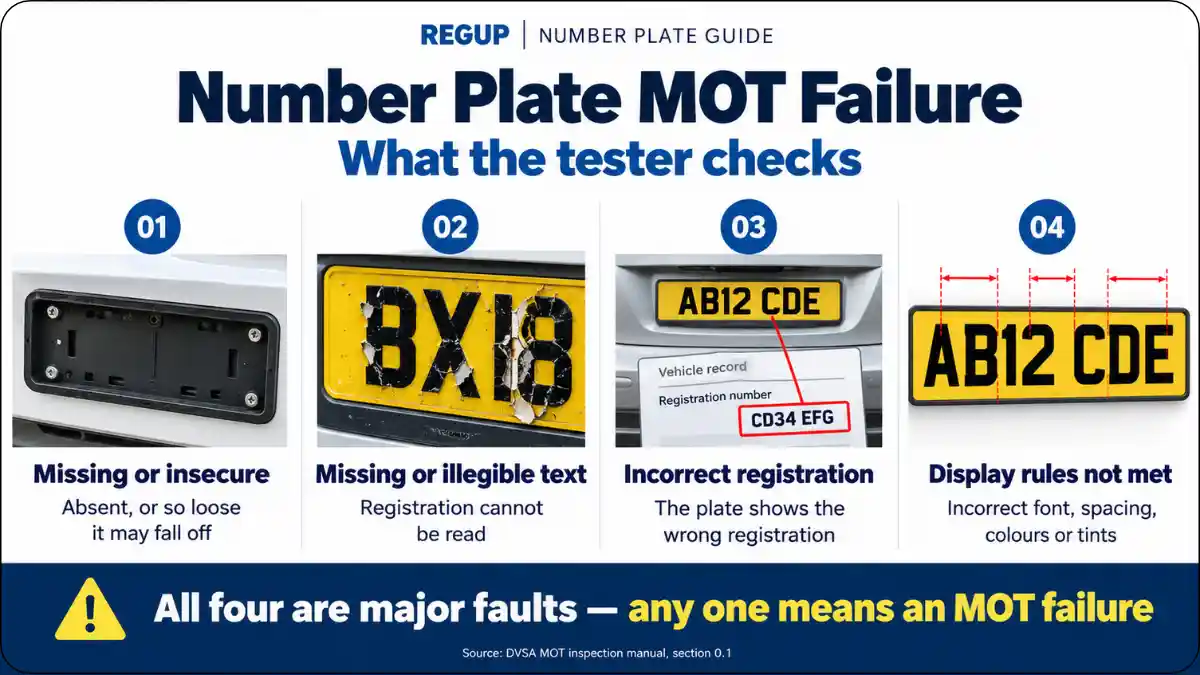
The MOT inspection manual lists four number plate defects, and every one is a major fault, so any of them means a failed MOT:
Defect | Examples |
|---|---|
Plate missing or insecure | No front plate, or a plate so loose it is likely to fall off |
Inscription missing or illegible | Faded, cracked or delaminated plates, or characters hidden by a bike rack, sticker or accessory |
Incorrect registration shown | Front and rear plates that do not match the vehicle record |
Plate does not meet the requirements | Wrong font, size or spacing, background pattern, tints or films, wrong colours, or shaded 3D characters on vehicles first used from 1 September 2021 |
Testers also check that front and rear plates show the same registration and, on vehicles made from 1 January 1980, that the front is white and the rear yellow with black characters, fitted vertically or as close to vertical as possible. The supplier name, postcode and BS mark are not part of the MOT check, but they are required by law.
The Most Common Reasons Plates Fail
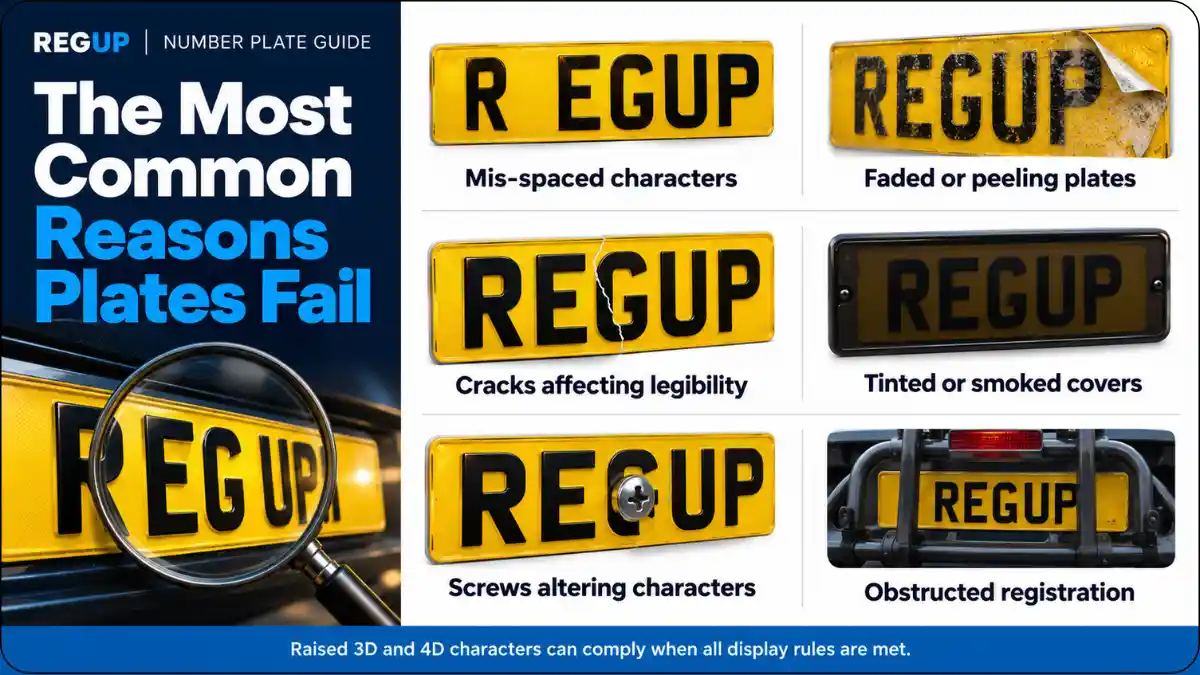
Mis-spaced private registrations made to spell a name
Faded or delaminated plates that have lost their reflective layer
Cracks running through characters after a knock or car wash
Tinted or smoked covers fitted as a style choice
Fixing screws placed so they change the shape of a character
A cycle carrier or tow bar hiding part of the rear plate
Raised characters are not on the list. 3D gel and 4D plates pass when the characters are a single shade of black, as explained in are 3D and 4D number plates legal. Spacing faults are covered in number plate spacing rules.
How to Fix an Illegal Number Plate
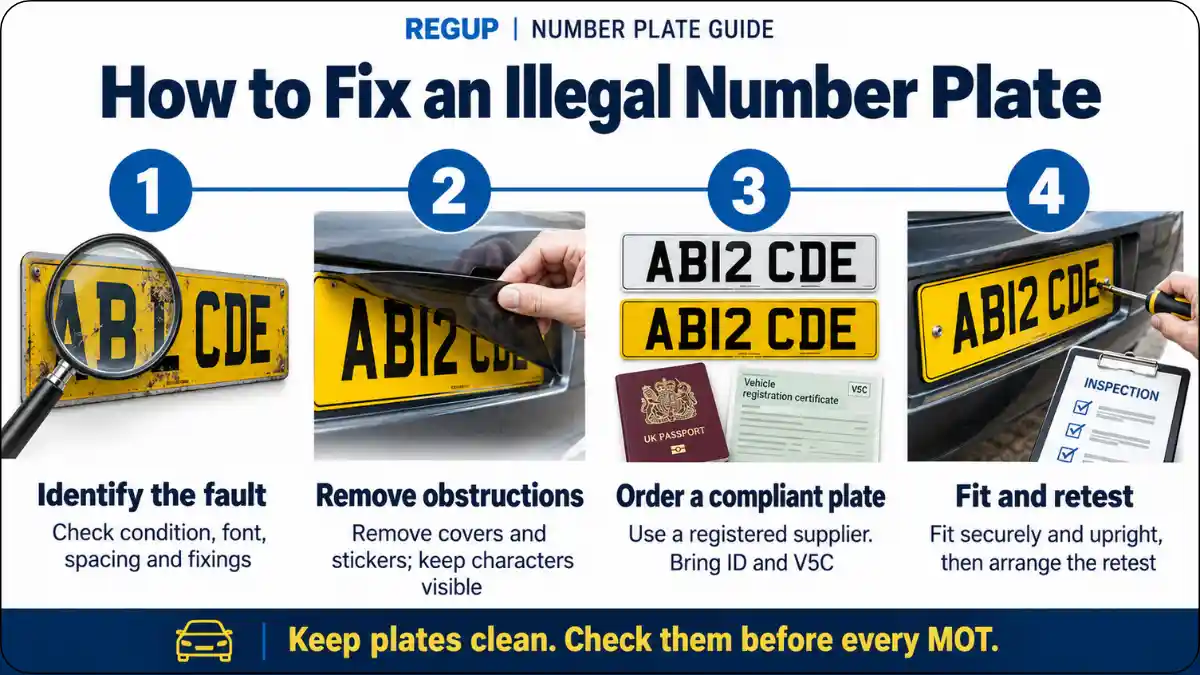
Identify the fault. Compare the plate against the MOT list above: condition, font, spacing, colours, covers and fixings.
Remove anything covering it. Take off tinted covers, stickers or surrounds that hide characters, and move or plate any cycle carrier.
Order a compliant plate. Order replacement number plates from a registered supplier with your ID and V5C. You can replace one side or both.
Fit it and retest. Fit the new plate securely and upright, then return for the retest. Driving after an MOT failure explains what you can do before then.
Avoiding a Fine in the First Place
Buy plates only from a DVLA registered number plate supplier, keep them clean, check them after every car wash and before every MOT, and never pay for a tinted or re-spaced plate for road use. Every road plate from our number plate builder has the font, size and spacing fixed, so it cannot be ordered in an illegal layout.
Frequently asked questions
What is the fine for an illegal number plate?
Up to £1,000 for driving with incorrectly displayed number plates, and the vehicle will fail its MOT.
Will my car fail its MOT because of the number plate?
It will fail the MOT if a plate is missing, insecure, illegible, shows the wrong registration or does not meet the display requirements. Every number plate defect is a major fault.
Can I be fined for a dirty number plate?
A plate that cannot be read can count as incorrectly displayed. Keep plates clean, especially in winter, to avoid both a fine and an MOT failure.
Is a cracked number plate an MOT fail?
It can be. If the crack or damage makes the plate illegible or delaminated, it is a major fault. Replace the damaged plate before the test.
Are mis-spaced private plates illegal?
Yes. Changing the spacing so a private registration spells a word is altering the registration, which can bring a fine of up to £1,000 and fails the MOT.
Does the MOT check the BS AU 145e mark?
No. The MOT does not check the supplier name, postcode or BS mark, but the law still requires them on plates supplied from 1 September 2021.