Quick answer
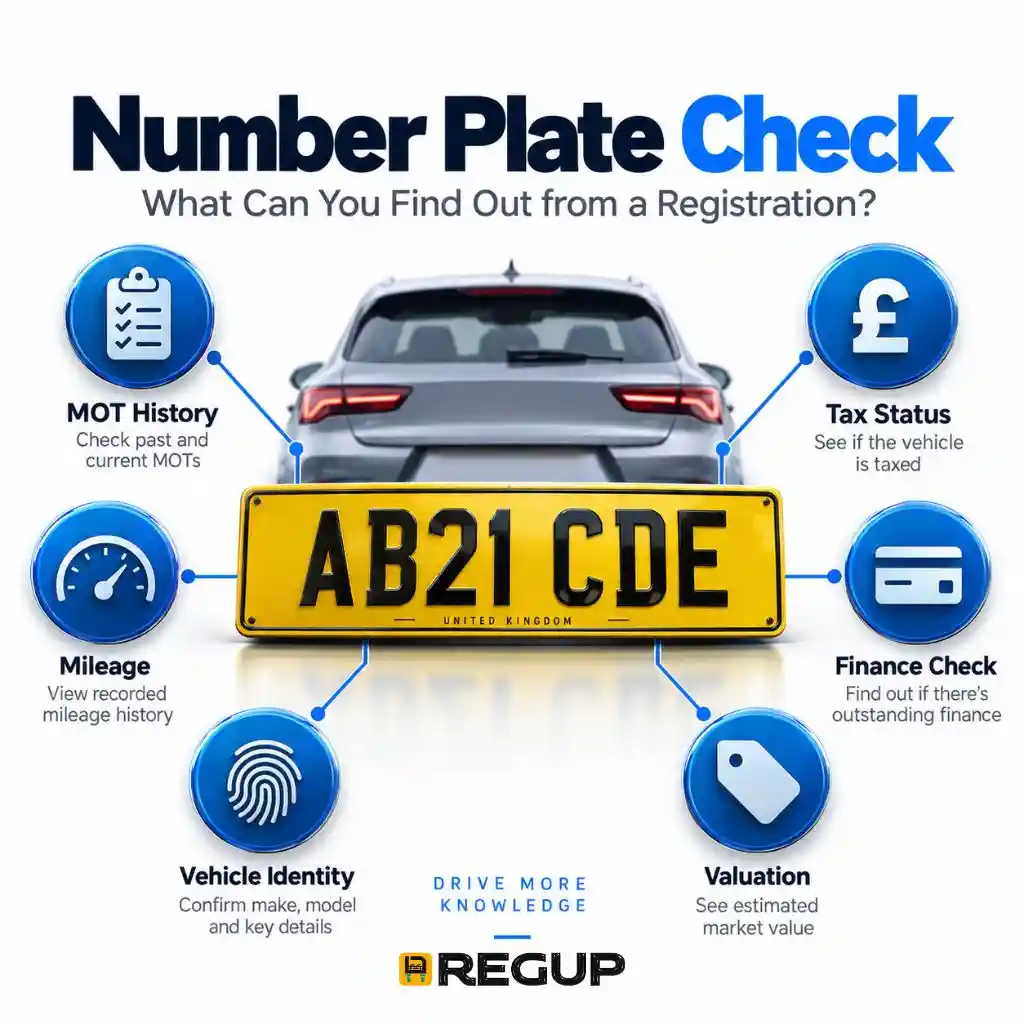
A number plate check uses a UK registration to look up vehicle details, MOT history, tax status and other recorded information. It's the starting point for any used car check and takes seconds.
Key points
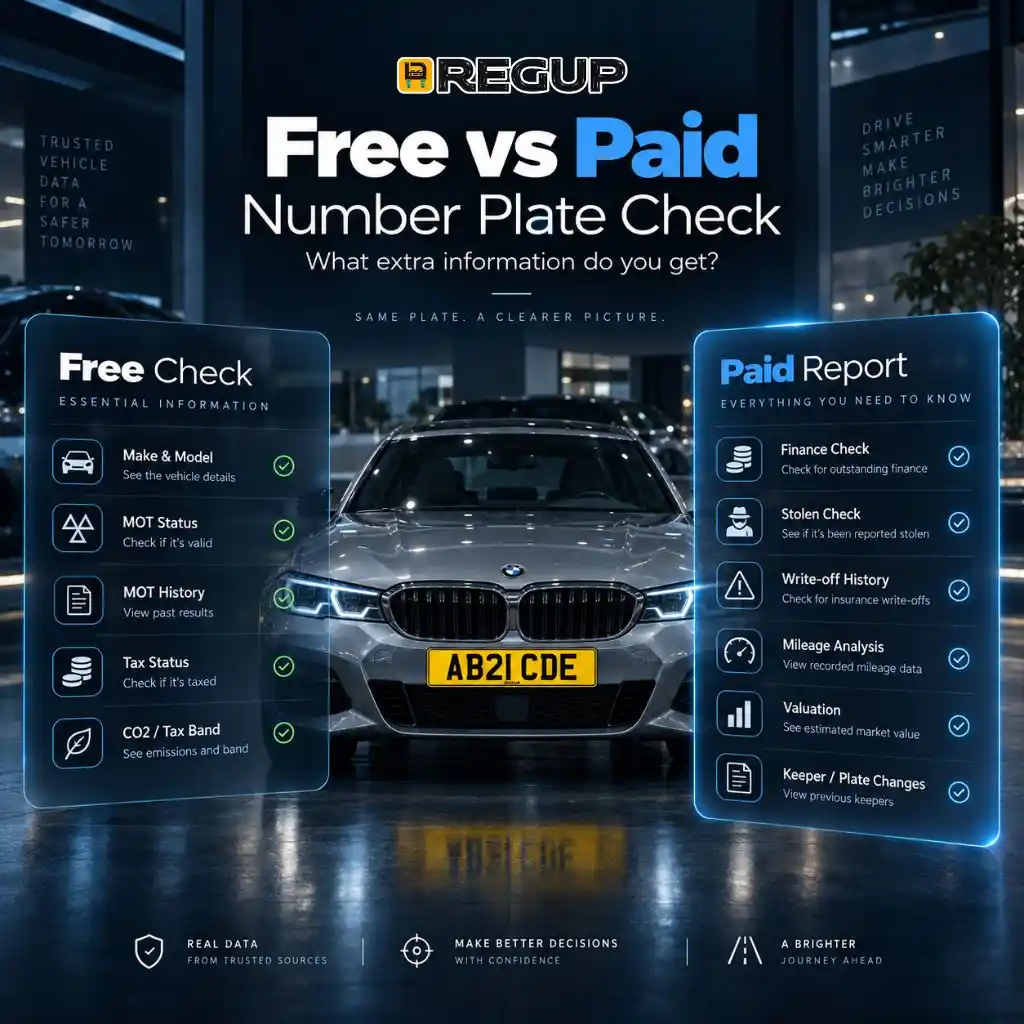
- Free checks show MOT status, tax status, make/model and basic vehicle details
- Paid reports add finance, stolen, write-off, mileage and valuation checks
- A number plate check never reveals keeper names, addresses or service history
- UK plates encode the region and age of first registration
What is a number plate check?
A number plate check, also called a reg check or registration lookup, uses the characters on a UK number plate to search vehicle databases. The registration number is linked to the vehicle record at the DVLA, so entering it retrieves the details stored against that vehicle. The depth of information depends on whether you run a free check or a paid report.
What can a free number plate check show?
A free check typically returns the core vehicle details held by the DVLA and DVSA.
- Make, model, colour, fuel type, engine size and year of manufacture.
- Current MOT status and expiry date.
- MOT history, including past results, advisories and mileage.
- Road tax status and expiry date.
- CO2 emissions and vehicle tax band.
- Basic vehicle identity confirmation.
What can a paid report add?
A paid vehicle history report goes beyond the public records and searches specialist databases.
- Finance check: Outstanding hire purchase or PCP agreements.
- Stolen check: Police and insurance stolen markers.
- Write-off check: Insurance total loss categories and damage history.
- Mileage analysis: Mileage timeline from MOT records with anomaly flagging.
- Valuation: Estimated market value range.
- Keeper history: Number and duration of previous ownerships.
- Plate and colour changes: Any changes to the registration number or recorded colour.
What can you not find from a number plate?
A registration check does not reveal everything. There are limits to what any database holds.
- The name, address or identity of the current or previous owners (the DVLA does not release this publicly).
- The mechanical condition of the vehicle (that requires a physical inspection).
- Unrecorded private finance arrangements or informal loans.
- Damage that was repaired without an insurance claim.
- The service history (this is held by garages and the owner, not the DVLA).
When should you run a number plate check?
Run a free check as soon as you see a car you are interested in. It takes seconds and confirms the basics before you invest time in contacting the seller, arranging a viewing or travelling to inspect the car. If the free check looks good, upgrade to a full report before you commit any money.
How does the UK number plate system work?
UK number plates follow a format that encodes the region of first registration and the date. The current format, introduced in 2001, uses two letters for the region, two digits for the age and three random letters. The age digits change every March and September. This means you can estimate the age of a car from the plate, but always verify with a check because plates can be transferred between vehicles.
Compliance: REGUP reports are data checks from available DVLA and DVSA sources, with trusted provider data for premium checks. Not legal, financial or mechanical advice. REGUP is not DVLA, DVSA or GOV.UK.