Key points
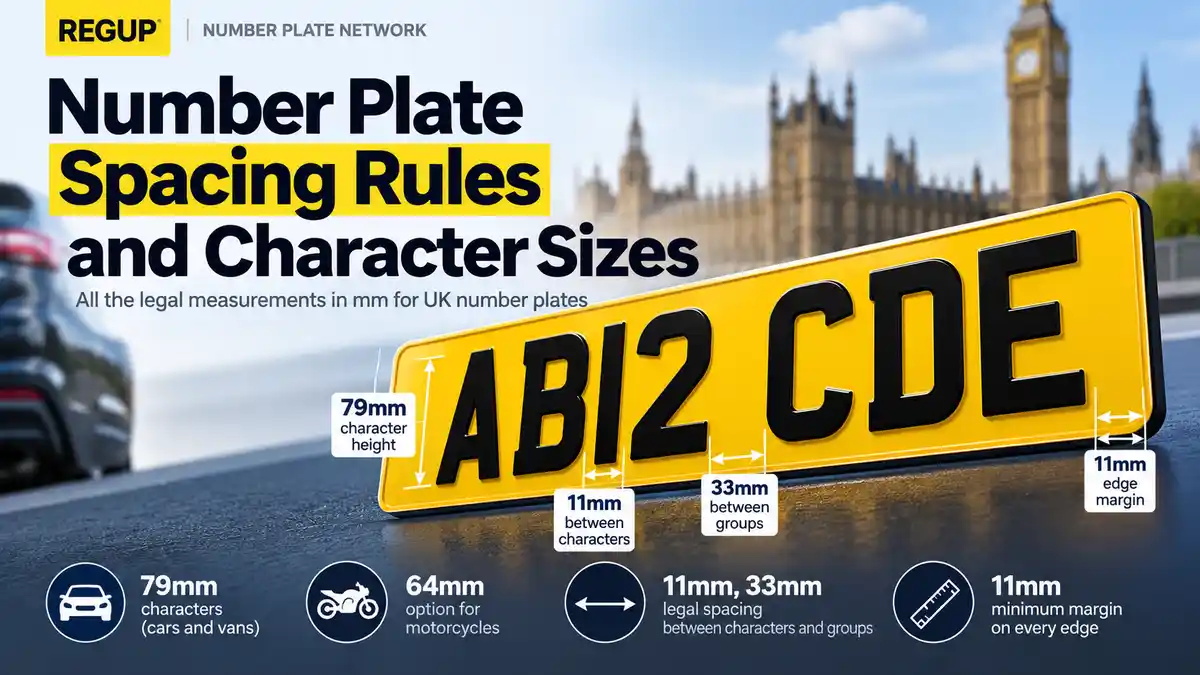
- Characters are 79mm tall and 50mm wide (all except 1 and I) on cars and vans
- 11mm space between characters within a group
- 33mm space between the two character groups
- At least 11mm clear margin on every edge, with a 14mm stroke width
- Motorcycles, tricycles and some quadricycles may use 64mm characters
- Sizes come from Schedule 3 of the Road Vehicles (Display of Registration Marks) Regulations 2001
- Moving, closing or adding gaps is altering the registration: illegal, an MOT failure, and a fine of up to £1,000
- Shorter registrations use shorter plates, never smaller characters or tighter gaps
Number Plate Spacing Rules and Character Sizes
Every character on a UK number plate has a fixed height, width, stroke and gap, set in the Road Vehicles (Display of Registration Marks) Regulations 2001. Number plate spacing rules exist so that people and cameras read the registration the same way every time, which is why moving a single gap makes a plate illegal. This guide gives every measurement in millimetres and sits under our uk number plate rules and the law.
UK Number Plate Character Sizes in mm
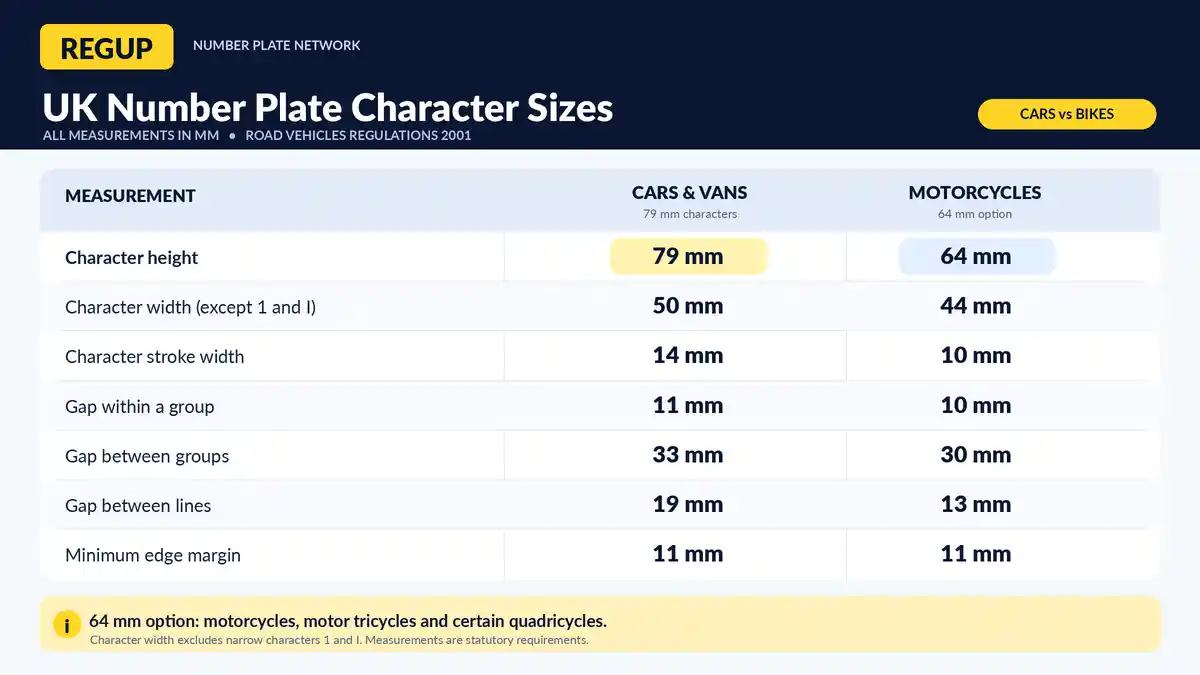
Measurement | Cars and vans (79mm) | Motorcycles (64mm option) |
|---|---|---|
Character height | 79mm | 64mm |
Character width (all except 1 and I) | 50mm | 44mm |
Stroke width | 14mm | 10mm |
Space between characters in a group | 11mm | 10mm |
Space between the two groups | 33mm | 30mm |
Space between two lines | 19mm | 13mm |
Minimum margin on every edge | 11mm | 11mm |
These figures come from Schedule 3 of the 2001 regulations. The 64mm option is allowed on motorcycles, motor tricycles and some quadricycles. The 50mm character width applies to plates made from 1 September 2001, when the font was narrowed from the older 57mm width.
How a Current Registration Is Spaced
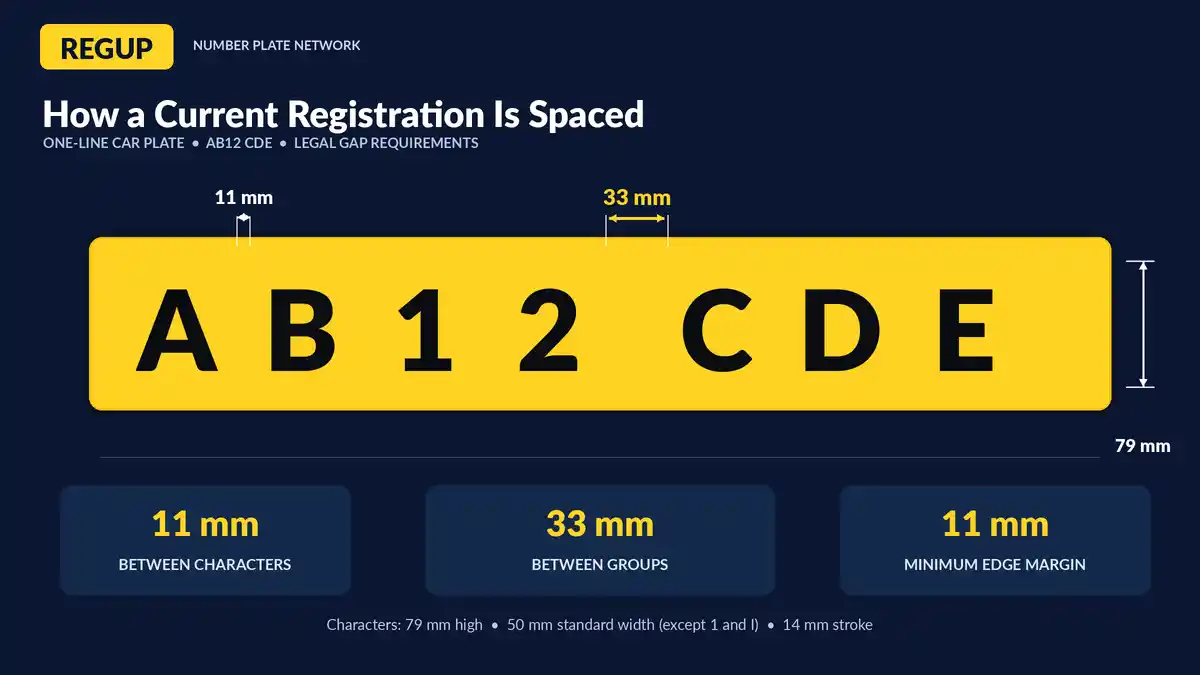
A current registration such as AB12 CDE is read as two groups: the memory tag and age identifier (AB12), then three random letters (CDE). On a one line plate the layout works out like this:
Four characters of 50mm with three 11mm gaps: 233mm
One 33mm gap between the groups
Three characters of 50mm with two 11mm gaps: 172mm
An 11mm margin at each end: 22mm
That gives a minimum plate length of 460mm and a minimum height of 101mm for a one line car plate, which is why the standard plate is 520mm x 111mm. The extra length leaves room for a flag and identifier. Every plate size is listed in plate sizes in mm.
Two Line Plates: Square and Motorbike Layouts
On a two line plate the first group sits on top and the second group underneath, with a fixed gap between the lines. For a current registration on a car plate that works out at:
Height: two 79mm lines, a 19mm gap and two 11mm margins, so at least 199mm
Width: four 50mm characters, three 11mm gaps and two 11mm margins on the top line, so at least 255mm
Motorbike with 64mm characters: at least about 163mm tall and 228mm wide
That is why a square 4x4 plate of about 279mm x 203mm and a 9 x 7 inch motorbike plate of 229mm x 178mm both hold a full registration legally.
Flags, Identifiers and the Margin
A flag and its identifier sit on the left of the plate in a band no wider than 50mm, and neither can intrude into the 11mm margin. The characters keep their full size and gaps, so adding a flag needs a longer plate rather than tighter spacing. The flag rules are covered in flags and national identifiers.
Older Registration Formats Follow the Same Gaps
Older prefix registrations (A123 BCD), suffix registrations (ABC 123D) and dateless numbers (ABC 123) use the same character sizes. Each has one wider gap in the position DVLA issued it, between the letters and numbers groups, and the same 11mm between the other characters. A dateless or private registration cannot have its gaps moved any more than a current one can.
Why You Cannot Change the Spacing
Closing a gap, adding one, or moving the group break so a registration reads as a name or word is altering the registration. GOV.UK states that letters and numbers cannot be rearranged or altered, and it is one of the most common reasons plates are stopped and fail the MOT. The same applies to tricks such as placing a black screw head so a 1 looks like an I, or using a slanted or stencil font.
The MOT inspection manual tells testers to check character size, stroke width, spacing, layout and font, and lists any plate that does not conform as a major fault. A mis-spaced plate can also bring a fine of up to £1,000. See number plate fines and MOT failure for how that works in practice.
Short Registrations and Smaller Plates
A shorter registration needs a shorter plate, but never smaller characters or tighter gaps. A five character registration still uses 79mm characters with 11mm and 33mm gaps; the plate is simply cut shorter. That is how short number plates stay legal, and why a long registration cannot be squeezed onto a short plate.
Let the Builder Set the Spacing
You do not need to measure anything yourself. When you build a plate with legal spacing, the builder applies the correct character sizes, gaps and margins for a car or motorbike layout and will not let a road plate be spaced any other way.
Frequently asked questions
What is the legal spacing on a UK number plate?
On a car plate, 11mm between characters in a group, 33mm between the two groups and at least 11mm margin on every edge, with characters 79mm tall and 50mm wide.
Can I change the spacing on my private plate?
No. Moving or closing gaps so a private registration reads as a name or word is altering the registration, which is illegal and fails the MOT.
How tall are number plate characters?
Characters on car plates are 79mm tall. Motorcycles, motor tricycles and some quadricycles may use 64mm characters.
What is the smallest legal number plate for a car?
For a current seven character registration on one line, about 460mm by 101mm, based on legal character sizes, gaps and margins. Shorter registrations can use shorter plates.
Are number plate margins a legal requirement?
Yes. There must be at least 11mm of clear plate around the characters on every edge, and flags or identifiers cannot sit in that margin.
Do older registrations follow different spacing?
They use the same character sizes and gaps, with the wider gap in the position the registration was issued, such as between the letters and numbers groups.