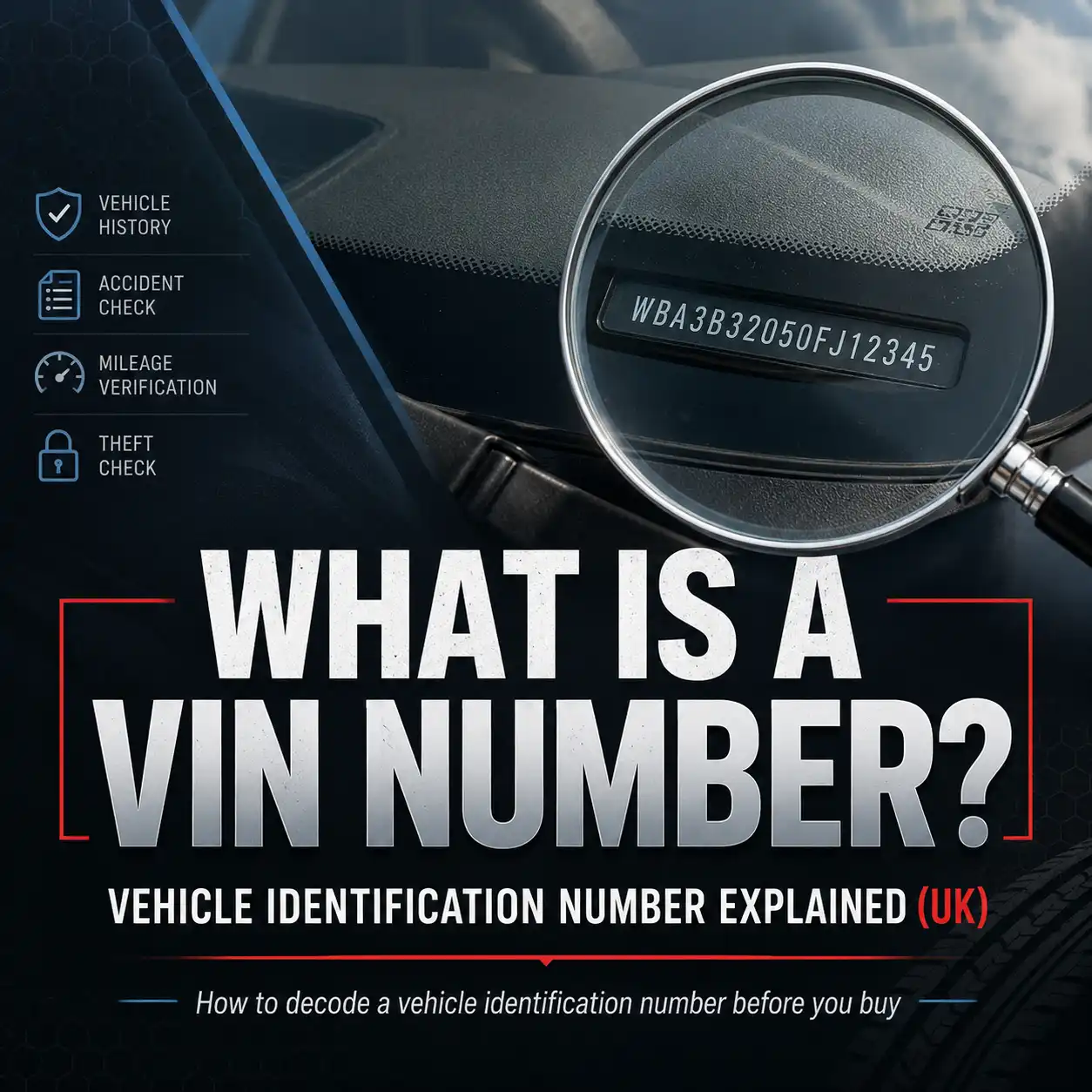
Key points
- A VIN is a unique 17-character code identifying one specific vehicle
- In the UK, VIN and chassis number mean the same thing
- VINs never use the letters I, O or Q
- Characters 1-3 (WMI) show the manufacturer and region
- Characters 4-9 (VDS) describe the model, body style and engine
- Characters 10-17 (VIS) form a unique serial number, often including model year and plant
- The VIN is permanent; the registration number can be reassigned
- Checking the VIN helps prevent misdescription and cloned or tampered vehicles
What Is a VIN Number? Vehicle Identification Number Explained (UK)
A VIN, or vehicle identification number, is a unique 17-character code that identifies one specific vehicle. It records the manufacturer, the vehicle's specification and a serial number unique to that car. In the UK the VIN is also called the chassis number, and the two terms mean the same thing.
This guide explains what a VIN number looks like, what each part of the code means, and how decoding a vehicle identification number helps you confirm a car's identity before buying.
What does a VIN number look like?
A modern VIN is 17 characters long, made up of letters and numbers. It never uses the letters I, O or Q, because they are too easily mistaken for the numbers 1 and 0. That rule alone is a quick way to spot an invalid or fake VIN.
The 17 characters are not random. They split into three sections, each describing a different aspect of the vehicle.
Decoding a vehicle identification number
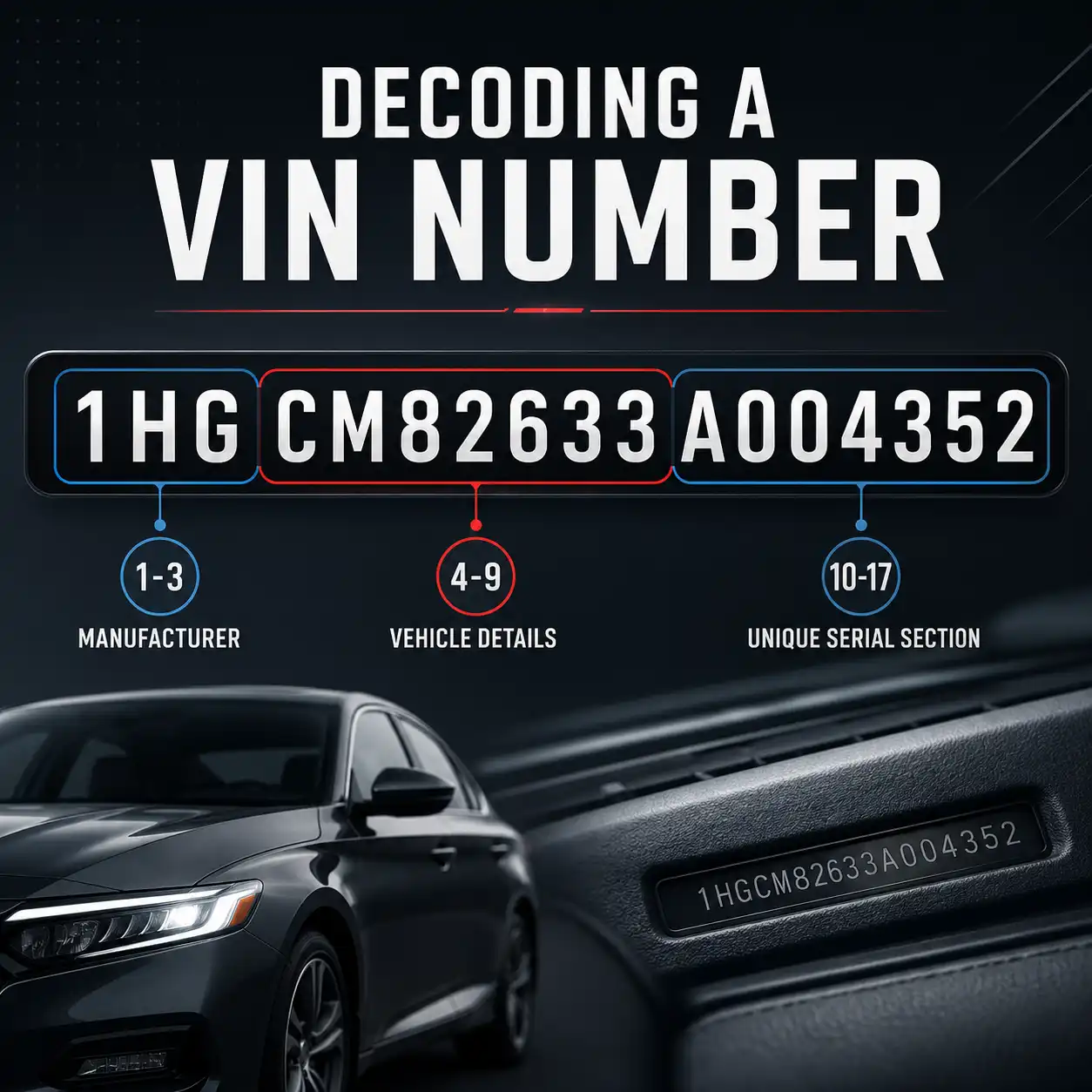
Characters 1 to 3: World Manufacturer Identifier (WMI)
The first three characters identify who built the vehicle and where. The first character shows the region of manufacture, and the next two identify the specific manufacturer. This is why a VIN can tell you the make and country of origin before you check anything else.
Characters 4 to 9: Vehicle Descriptor Section (VDS)
The middle section describes the vehicle itself: model, body style, engine type and other factory-set features. These are the descriptors that separate one version of a car from another. In many VINs, character 9 is a check digit used to validate the code.
Characters 10 to 17: Vehicle Identifier Section (VIS)
The final section makes the VIN unique to one car. Character 10 often indicates the model year and character 11 the assembly plant, followed by a serial number. The serial block at the end never moves between vehicles, which is why the VIN is the reliable way to trace a single car.
VIN vs chassis number vs engine number
VIN and chassis number are the same thing: the permanent 17-character identifier stamped into the vehicle. The engine number is different. It is a separate code assigned to the engine, and it can change if the engine is replaced. So a VIN identifies the car for life, while the engine number only identifies the current engine.
VIN vs registration number
The registration number, or number plate, can be reassigned or transferred between vehicles. The VIN cannot. That is the key difference: a plate can change, but the VIN stays with the same car from manufacture. When you want to confirm the true identity of a vehicle, the VIN is the anchor, and the registration is the everyday label.
How to decode a VIN or check it online

Not sure where the number is stamped? See our guide on where to find the VIN number on your car.
UK data disclosure rules mean checks typically confirm and cross-check vehicle identity rather than printing the full 17 characters. Always confirm the complete VIN against the physical car and the logbook.
Why decoding the VIN matters when buying
Confirming the VIN protects you from two common problems. First, misdescription: the decoded specification should match the advert and the V5C. Second, and more serious, identity fraud: cloned cars copy a legitimate VIN onto a different vehicle, and tampered VINs are ground down or restamped to hide a car's real history. Reading the VIN and checking it matches everywhere is a simple, effective defence.
Run a VIN check by registration. Confirm a vehicle's identity before you buy.
REGUP is an independent vehicle checking service and is not DVLA, DVSA or GOV.UK. Checks use DVLA and DVSA source data where available, with trusted provider data for premium report checks.
Frequently asked questions
What is a VIN number?
A VIN is a unique 17-character vehicle identification number that identifies one specific vehicle, recording its manufacturer, specification and serial number. In the UK it is also called the chassis number.
What does a VIN number look like?
It is a 17-character mix of letters and numbers that never includes I, O or Q. It is split into three sections covering the manufacturer, the vehicle specification and a unique serial number.
Is a VIN the same as a chassis number?
Yes. In the UK the VIN and the chassis number are the same unique identifier for the vehicle.
Can I decode a VIN number for free?
You can read the sections of the code yourself, and start a free vehicle check by registration to confirm identity details online.