
Key points
- VIN is a unique 17-character code, also called the chassis number in the UK
- The VIN never contains the letters I, O or Q
- Five places to check: V5C logbook, windscreen base, door pillar, engine bay/chassis, vehicle documents
- All five VIN locations must match exactly, character for character
- Ground-down, uneven or reprinted VIN plates/stickers indicate possible tampering
- You can run a VIN check by registration online before viewing the car in person
Where to Find the VIN Number on Your Car (UK Guide)
The VIN, or vehicle identification number, is stamped and printed in several fixed places on a UK car. The quickest places to find it are the V5C logbook, the base of the windscreen on the driver's side, the driver's door pillar sticker, and the engine bay or chassis. On most modern vehicles it is a 17-character code, and the same number should appear in every location.
This guide shows exactly where to find the VIN number on a car, what to check in each place, and how to confirm the number matches before you buy.
Quick answer: the 5 places to find your VIN
V5C logbook (registration certificate), in the vehicle details section.
Windscreen base, driver's side, viewed from outside through a small cut-out in the dashboard trim.
Driver's door pillar or door jamb, on a sticker or metal plate visible when the door is open.
Engine bay or chassis, stamped into the metal, often near the firewall or suspension mount.
Vehicle documents , including the MOT certificate, insurance schedule and service book.
What the VIN number is
A VIN is a unique 17-character code that identifies one specific vehicle. In the UK the terms VIN and chassis number are used to mean the same thing, so where a seller or logbook says chassis number, they are referring to the VIN. It never contains the letters I, O or Q, because those are too easily confused with 1 and 0.
For a full breakdown of what each part of the code means, see our guide on what a VIN number is and how to read it.
1. On the V5C logbook
The V5C registration certificate lists the VIN in the vehicle details section, near the make, model and registration number. This is the first place to look because it lets you compare the paperwork against the physical car before you view it.
Check: the VIN on the V5C must match the number stamped on the car exactly, character for character. A mismatch is one of the clearest warning signs of a cloned or misdescribed vehicle.
2. At the base of the windscreen
Most cars show the VIN through a small window in the dashboard, at the bottom corner of the windscreen on the driver's side. Stand outside the car and look down through the glass. This plate is designed to be visible without opening anything, so it is quick to check during a viewing.
3. On the driver's door pillar
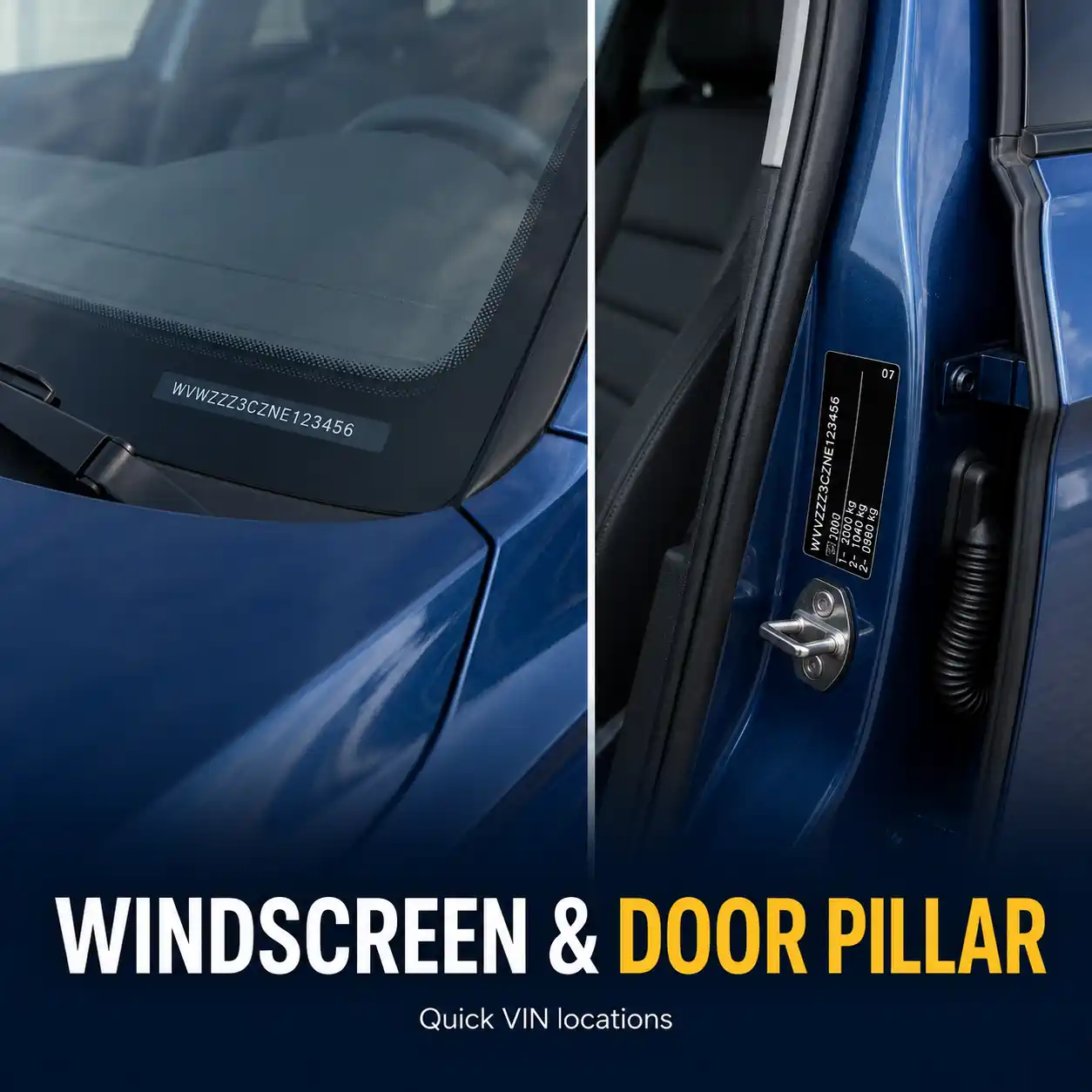
Open the driver's door and look at the door pillar (the frame the door latches onto) or the door jamb. Manufacturers place a printed sticker or a riveted metal plate here showing the VIN, and often the paint code and tyre pressures too. The sticker should look original and undisturbed, not peeling, reprinted or fitted with non-standard rivets.
4. In the engine bay or on the chassis
Open the bonnet and look for the VIN stamped into the metal of the engine bay, commonly near the firewall, the slam panel or a suspension turret. On some vehicles it is stamped directly into the chassis. A genuine stamping looks consistent and factory-made. Ground-down, uneven or freshly restamped numbers point to VIN tampering and should be treated as a serious red flag.
5. On your vehicle documents
Beyond the V5C, the VIN usually appears on the MOT certificate, the insurance schedule, finance agreements and the service book. Cross-checking these against the car is a fast way to confirm the paperwork all describes the same vehicle.
How to find the VIN from a registration number
If you only have the number plate, you can start a check online rather than inspecting the car in person. Enter the registration to run a VIN check by registration with REGUP, review the vehicle identity details linked to that plate, then compare them against the VIN you find on the car and in the V5C.
Why it matters that every VIN matches
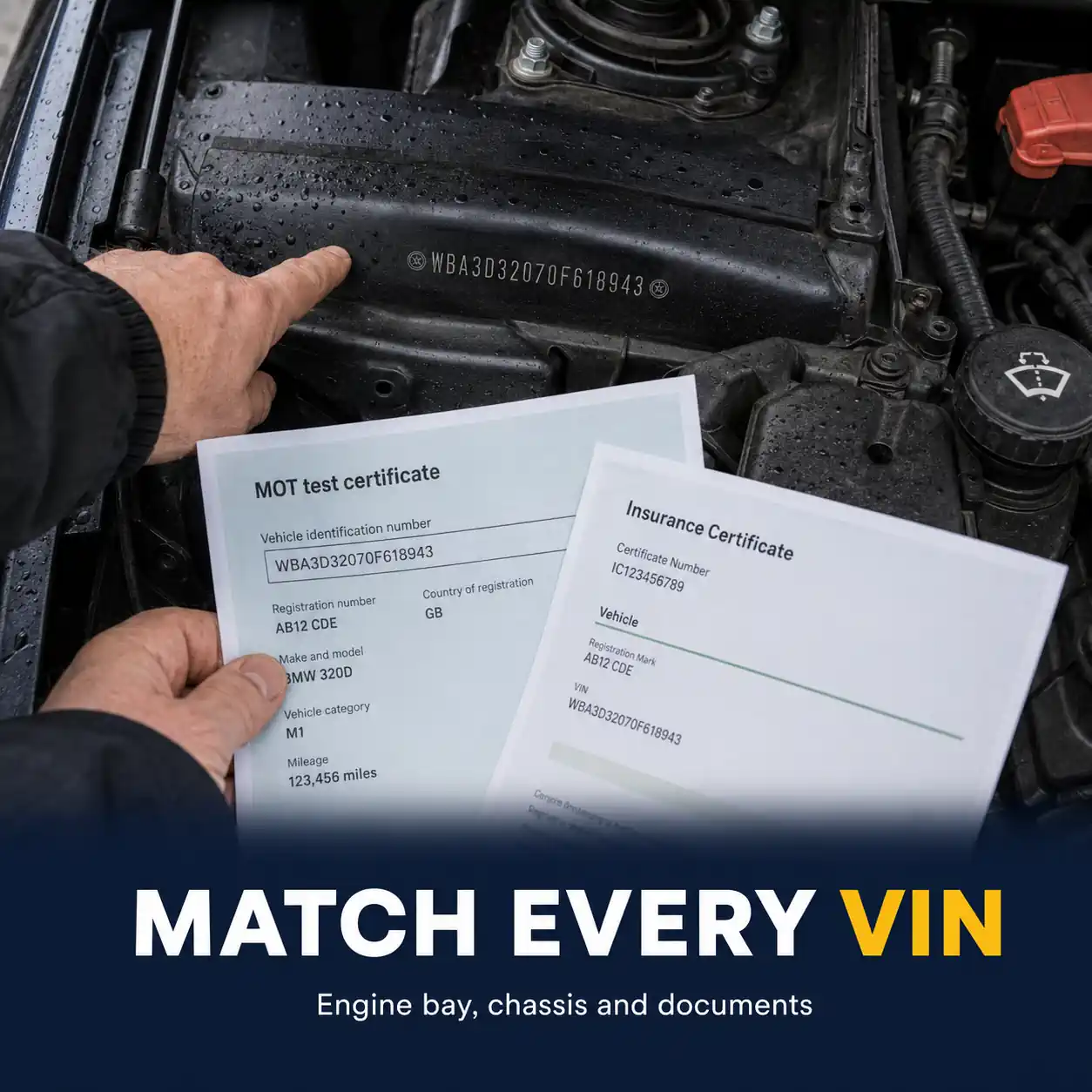
Checking the location of the VIN is only half the job. The value is in confirming that every VIN, on the windscreen, the door pillar, the chassis, the V5C and the documents, is identical. Matching numbers support a genuine vehicle identity. Any difference can indicate a paperwork error, a replaced panel, plate issues or, at worst, a cloned or stolen car.
Final Thoughts
Knowing where to find the VIN number on your car takes only a few minutes, but it's one of the most useful checks you can do before buying: look at the V5C, the windscreen base, the door pillar, the engine bay or chassis, and your vehicle documents, then make sure every number matches exactly. If they don't, walk away or dig deeper — it's rarely worth the risk. A quick VIN check by registration before you view the car gives you a head start, but the physical inspection is what confirms the vehicle in front of you is the one on paper.
Frequently asked questions
Where is the VIN number on a car?
On most UK cars the VIN is at the base of the windscreen on the driver's side, on the driver's door pillar sticker, and stamped in the engine bay or chassis. It is also printed in the V5C logbook.
Is the chassis number the same as the VIN?
Yes. In the UK the chassis number and the VIN refer to the same unique 17-character identifier for the vehicle.
Can I find my VIN number online for free?
You can start a free vehicle check by registration to see key identity details, then upgrade for a fuller history report. Always confirm the full VIN against the car itself. Start a VIN check by registration.
Where do I find the VIN on the V5C?
It is listed in the vehicle details section of the V5C registration certificate, alongside the make, model and registration mark.